
TL;DR: I have excellent news for anyone who has ever spent an unreasonable amount of money on the perfect lamp: beauty may not be frivolous after all. Neuroaesthetics is giving us a fascinating look at how our surroundings affect us and makes a scientific case for something designers have been defending for years.
There are certain moments in your career when you realize, Oh, these next thirty seconds are going to make or break me.
It was one of my first days on a new job, I walked onto a construction site for introductions.
Hard hats. Work boots. Dust. A room full of men who had clearly been building big things together for a very long time.
And then me. The new designer. The only woman in the room.
Yeah. I could feel every set of eyes clocking me as I walked in, giving me the full up-and-down scan.
We started going around the room introducing ourselves. Superintendent. Electrician. Plumber. Foreman.
Then it got to me. “Hi, I’m Sarah. I’m the designer on the project.”
The construction lead, a big, burly guy named Reggie, looked me up and down.
And snorted. Intentionally.

He turned to the guy next to him, “Why’s she even here wasting space on my job site? We’re the ones actually doing the work and building things. She’s just fluff.”
And then took it a step farther. “If you’re gonna take up space, why don’t you go make yourself useful and make us a pot of coffee?”
Really? Mmkay.
And suddenly every set of eyeballs in the room was on me.
Decision Time: I had options. And approximately half a second to choose one:
- Do I call him out and immediately become The Difficult Woman?
- Do I laugh nervously, meekly make the coffee and spend the rest of the project quietly hating myself?
- Do I stand tall and deliver an impassioned speech about the value of interior design while surrounded by men holding power tools?
Suddenly, another man on the crew stood up. “Hey man, come on. Her work matters,” he said. “She’s bringing the beauty that we’re going to build.”
Well. Thank you, sir.
I truly appreciated the backup. But I also knew every guy in that room was still waiting to see what I was going to do.
So I looked at that big burly construction man glaring at me. “Reggie, I know you’re not actually the tough-guy caveman you’re pretending to be. I’m sure there’s a sweet teddy bear hiding in there somewhere.”
“So sure, I’ll make the coffee today.” Eyelash flutter.
“Tomorrow, it’s your turn. You’ll make the pot.” And I turned on my heels and walked out.
But What If Beauty Isn’t Just “Fluff”?
I’ve thought about that exchange with Reggie a lot over the years.
Because “fluff” is exactly how beauty and design have often been treated.

For a long time, design and beauty have been easy to dismiss as subjective. Nice to have. Important only after the serious stuff has been taken care of.
Design is the thing that’s difficult to defend when budgets get tight and Spreadsheet Guy starts asking:
“BUT WHAT’S THE ROI?” for whatever pretty thing I’m pitching.
And he wants me to give him a snippet response that fits perfectly into cell G47.
How do you quantify and itemize the value of something beautiful? For most of my career, that has been a frustratingly difficult question to answer.
But something really exciting is happening with those white-lab-coated scientist researchers, and I’m here for it.
Our Spaces Do Things To Us.
Some make us want to stay. Some make us want to get the heck out.
And some quietly irritate us every single day until we’ve accepted that apparently hitting our hip on the kitchen counter is simply part of homeownership.
But you don’t stand there consciously thinking, My built environment is negatively affecting my wellbeing.
You swear at the counter. And move on with your life. (Been there).
But here’s what fascinates me:
We don’t always realize the space is the reason we feel the way we do.
I spent years designing hotels, and a mildly ridiculous amount of my personal life staying in them, so I’ve become a little obsessed with these questions.
Why does one room make us relax while another puts us on edge? Why do certain places make us feel curious, connected, energized, safe, or simply good?
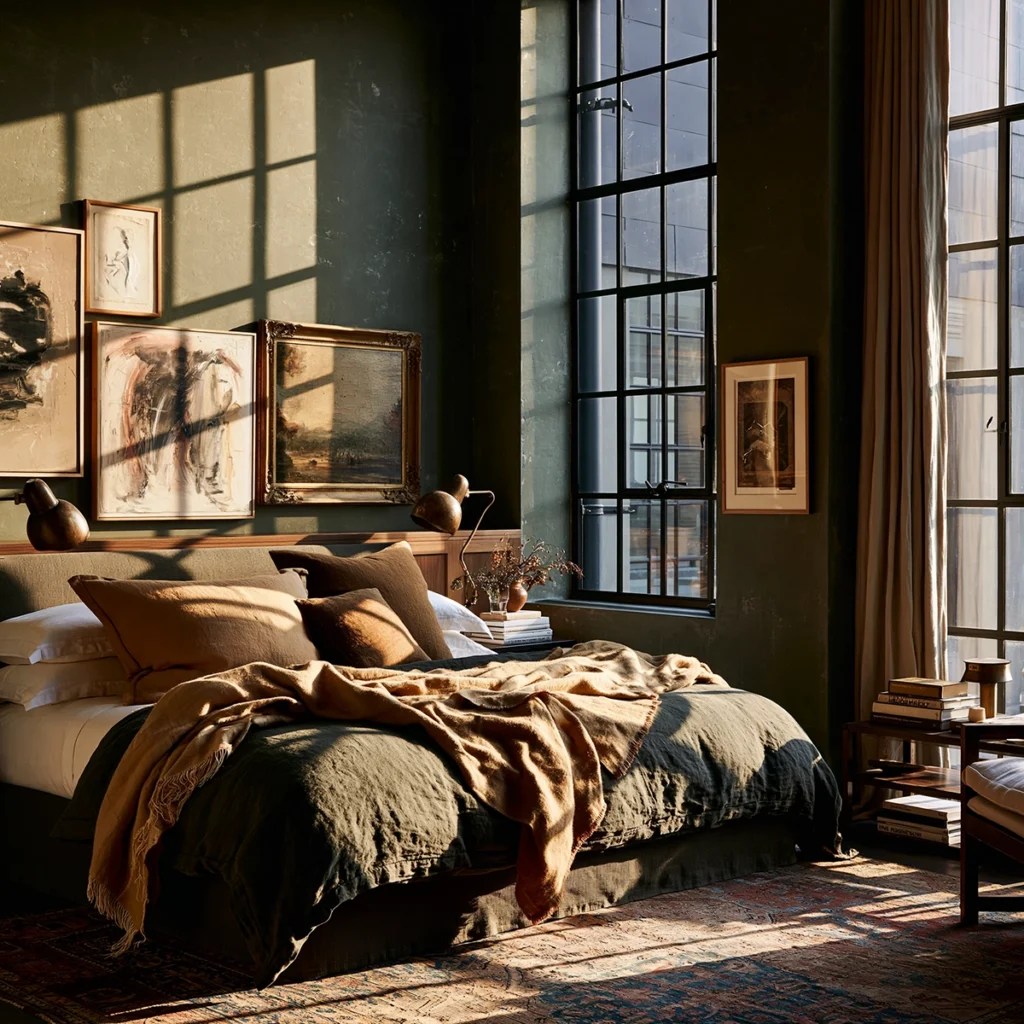
Apparently other people are fascinated by this too, and there’s a field of science studying it.
It’s called neuroaesthetics.
Neuroaesthetics Isn’t Just the Science of Pretty Things
Despite the name, this isn’t about scientists putting people into brain scanners to determine whether humanity has finally had enough boucle.
Neuroaesthetics broadly explores how we perceive and respond to aesthetic experiences: art, music, architecture, nature, beauty, and other sensory experiences.
And what fascinates me as a designer isn’t the possibility that science can tell us what’s objectively “beautiful.”
I don’t want it to.
I’m interested in a much more useful question:
What is This Space Doing to Me?
Because we’ve all walked into places that seem to change us.
Some make your shoulders drop. Some make you want to stay for another drink. Some make conversation feel effortless. Some make you curious. Energized. Cozy. Connected.
And some make you clench your jaw, raise your voice and wonder why you’re suddenly annoyed with everyone you’ve ever met.

Our environments aren’t neutral
Your Space is Making Demands of You.
Think about the pile on the counter.
Mail. Sunglasses. An Amazon return. A charger belonging to something no one can identify.
You walk past it twenty times a day. And every time: Ugh.
Maybe it’s visual noise. Maybe those objects represent a bunch of unfinished tasks. Maybe you’ve simply been meaning to deal with the damn thing since Tuesday.
Either way: Your house just asked something of you again.
Once you start thinking about your environment this way, you see these tiny transactions everywhere.
- The drawer that can’t open when the dishwasher is down. (Fight with me).
- The overhead light that feels like an interrogation. (Strain a little).
- The table clearance requiring a sideways shimmy. (Squeeze through here).
- The bedroom where streetlights hit you all night. (Sleep? Cute).
None of these things is catastrophic. But you encounter them over and over and over again.
Tiny environmental friction accumulates.
But Spaces Can Give Something Back, Too
Of course, our environments aren’t just irritating us all day long. The opposite happens, too.
Think about the window seat in your house that everyone naturally gravitates toward. Or the restaurant where you went in for dinner and somehow you’re still sitting there three hours later. Nobody wants the check yet. You’re comfortable, the conversation is good, the lighting is flattering and apparently you all live here now.
Hotels are particularly good at this when they get it right. There have been plenty of nights when I’ve fully intended to head upstairs after dinner, only to look around the lobby and think, Well… maybe one more drink. Something about the room makes leaving feel like you’d be ending the night too soon.
And then there are much smaller moments. Morning light hitting a wall in your house. The sound of water in a courtyard. A breeze coming through an open window. A street you stumble onto while traveling where the scale of the buildings, the trees, the architecture, and the light all come together in a way that makes you slow down without consciously deciding to.
That’s what interests me. We’re constantly responding to our surroundings, but we’re not necessarily narrating those responses in our heads.
You don’t think, The proportions of this streetscape are creating a pleasant pedestrian experience. You think, Let’s walk this way.
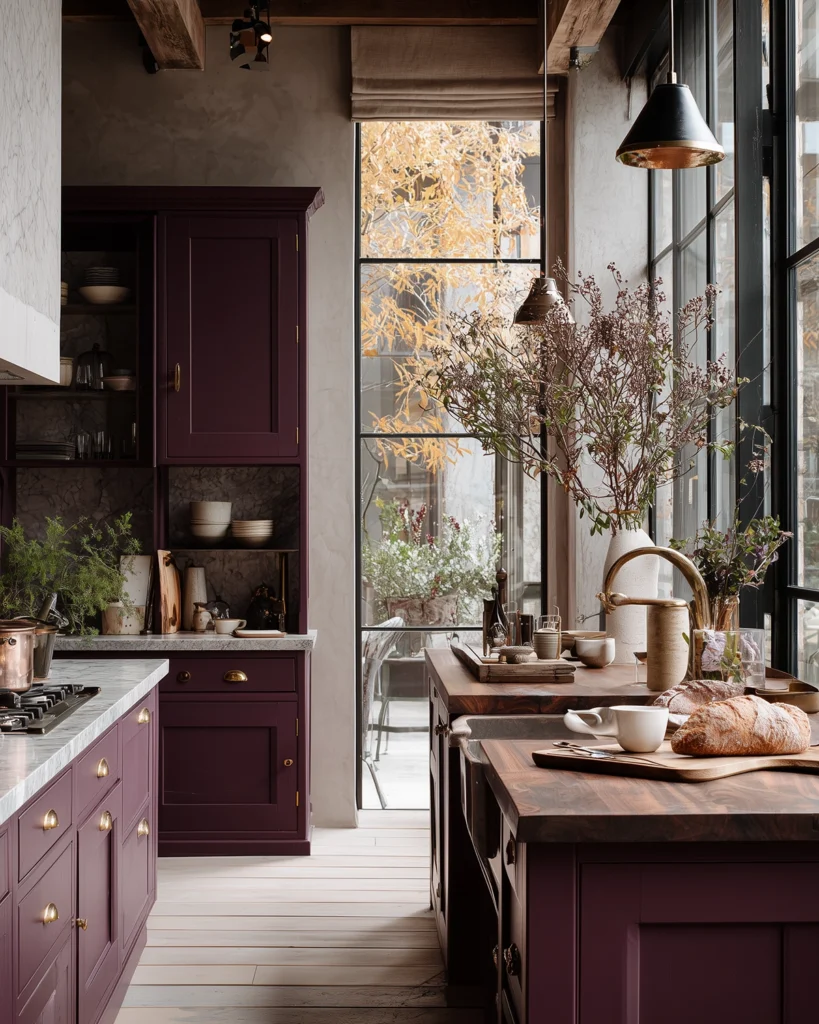
You don’t analyze why the hotel lobby is making you feel relaxed and social. You order another drink.
And you certainly don’t conduct a formal assessment of the window seat. You just always sit there.
That’s part of what makes this whole subject so fascinating to me. There’s the space itself, and then there’s our experience of being in it. Those aren’t always the same thing.
Some Fascinating Neuroaesthetic Findings in Interior Design
This is where things start getting interesting. Researchers studying how we respond to our environments have found some surprising connections between seemingly ordinary design choices and how we feel and function.
Color: In controlled research, changing a color’s brightness and saturation changed how stimulating and pleasant people found it, and researchers recorded physiological differences in response to color conditions, too. So color isn’t simply something we like or don’t like. Our bodies can respond to it. Read the color study on PubMed
Clutter: In a UCLA study, women who described their homes as more cluttered, stressful and unfinished also showed higher daily cortisol patterns and worsening mood over the course of the day. The study doesn’t prove clutter caused those responses, but suddenly that pile of Amazon returns glaring at you from the counter feels a little less innocent. Read the UCLA study on PubMed
Which is why I keep coming back to the same thought:
Maybe all that “fluff” has been doing more than we gave it credit for.
So, Maybe Beauty Isn’t Fluff After All
The more I learn about neuroaesthetics, the more it reinforces something I’ve believed for years: our surroundings matter.

No, you can’t fix every annoying drawer, bad acoustic, or kitchen counter that seems personally determined to bruise you.
But you can be more intentional about the other side of the equation.
Maybe you book the beautiful hotel you’re genuinely excited to experience instead of automatically grabbing whatever popped up in the flash sale. Maybe the drab sofa you already own gets two fabulous pillows that make you happy every time you walk into the room. Maybe you bring home flowers. Take the prettier route. Sit outside. Go see the exhibit. Have dinner somewhere that makes an ordinary Tuesday feel a little less ordinary.
And just as importantly, notice the beauty that’s already there.
Seek more of it. And create more of it where you can.
That’s the art of Aesthetic Living.
Years ago, a stranger I met in a hotel bar gave me a one-word assignment that turned into a daily game. You can read that full story here.
I had no idea that simple game would permanently change the way I moved through the world.
Wanna Play the Game?
Now, years later, and with a whole lot more understanding of why noticing beauty might actually matter, I’m bringing that game back.
Except this time, I want to play the game with you.
I’ve made you an app. It’s free, it’s fun, and for the next 30 days, we’re going to see what happens when you start looking at your world a little differently.
I have a feeling you’re going to start seeing things you didn’t know you were missing.
Wanna skip ahead and dive right in? Click below.

FAQ’s About Neuroaesthetics
What is neuroaesthetics?
Neuroaesthetics is the study of how our brains and bodies respond to aesthetic experiences such as art, music, architecture, nature and beauty. In less lab-coated terms: why does one space make you want to settle in with another drink while another makes you immediately start looking for the exit?
What does neuroaesthetics have to do with interior design?
Neuroaesthetics can help us understand how elements of our surroundings, such as color, light, spatial arrangement and visual complexity, relate to perception, emotion and experience. It shifts the design conversation from simply “Does this look good?” to the far more interesting question: “What is this space doing to me?”

Can interior design actually affect your mood?
Our surroundings can influence how we feel and experience a space, although the effects vary by person, context and design element. A room isn’t going to cure your existential crisis, but light, color, clutter, acoustics, comfort and spatial layout can all contribute to whether a place feels calming, stimulating, stressful or inviting.
Can clutter cause stress?
Research has found associations between stressful or cluttered home environments and measures of stress and mood. That doesn’t mean one rogue Amazon return is single-handedly destroying your cortisol levels, but it does suggest that the visual and unfinished demands in our surroundings may matter more than we think.
Is there science behind Aesthetic Living?
Yep, and it’s fascinating. Neuroaesthetics explores how our brains respond to beauty and our sensory environments. Aesthetic Living takes that idea out of the lab and into everyday life: what happens when we deliberately pay more attention to the things that delight us? I created a fun game to help you start noticing more beauty in your world. You can play it here!
Beauty, At Home and Away
The deeper I get into neuroaesthetics, the more convinced I am that beauty deserves a little more credit.
Not as decoration. Not as indulgence. As part of how we experience our lives.
And really, this is the idea behind everything I’m doing here at Roam & Reside.
How can we make the experience of our own lives better?
Through the spaces we create at home. The places we seek out when we travel. And all those beautiful, strange, delightful little things we could be noticing along the way.
You’re going to spend your life moments somewhere.
You might as well love being there.
And Back to that “Caveman”…
And for the record, Reggie and I did not spend the rest of our careers glaring at each other over pots of coffee.
We ended up working together for years.
I earned his respect. He earned mine. We built a lot of beautiful spaces together—and somewhere along the way, the Caveman and the Fluff became friends.
We still are today.
Turns out, the stuff we once called fluff might be doing more heavy lifting than any of us realized.
