
TL;DR: If you love the romance of cottagecore but want something richer, moodier, and considerably less precious, the dark cottagecore aesthetic may be your jam. Think mossy greens, rich woods, aged brass, natural materials, vintage pieces, and rooms that feel collected over time. It’s romantic without being precious, dark without being gloomy, and absolutely does not require a cottage. It’s cottagecore after dark and frankly, things just got a lot more interesting.
Not every cottage has wildflowers climbing the fence.
Some sit at the edge of the woods, wrapped in ivy and morning fog. They smell like old books, cedar, and something baking in the oven. The windows glow with candlelight while it rains outside.
That’s Dark Cottagecore.
Contrary to how it sounds, it isn’t about making your home dark. It’s about making it feel deeper, quieter, and more connected to nature.
It’s one of the internet’s fastest-growing decorating trends (Pinterest says searches for it are up 915%), but don’t let the name fool you. This isn’t Gothic. It isn’t spooky. And it definitely isn’t Halloween décor.
Dark Cottagecore is everything people love about Cottagecore: nature, nostalgia, warmth, and comfort. It just comes with a moodier palette and a little more mystery. Think less flower field, more forest path. Less sunshine, more candlelight.
If classic Cottagecore feels like picking wildflowers on a spring afternoon, Dark Cottagecore feels like reading Jane Eyre beside a crackling fire while a storm rolls in.
And honestly? I’m here for it.

What Is Dark Cottagecore?
Dark cottagecore is a decorating style built on nature, nostalgia, and comfort. It’s got the same foundation as classic cottagecore but with a deeper palette and a moodier feel.
It’s less about darkness and more about atmosphere.
Imagine two cottages.
One sits in a sunny meadow with climbing roses, fresh linen curtains, and a basket of wildflowers on the table.
The other is tucked beneath towering trees. The shelves are lined with old books, the furniture has been passed down for generations, and a candle is burning even though it’s only four in the afternoon. The aesthetic borrows from English cottages, old libraries, countryside manors, and woodland landscapes to create homes that feel warm, grounded, and deeply personal.
It’s the decorating equivalent of choosing a rainy afternoon over a sunny one.
It’s proof that cozy doesn’t have to be light to feel inviting.
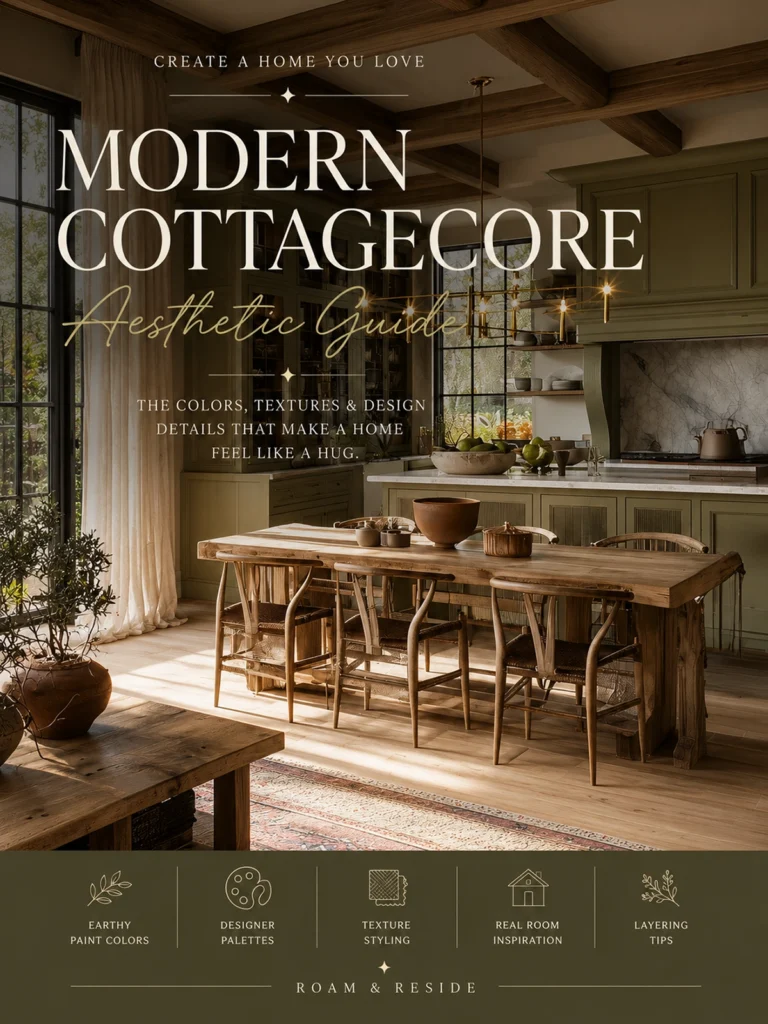
Want My Cottagecore Aesthetic Cheat Sheet?
There’s a very fine line between dark cottagecore that feels layered and romantic, and a room that looks like a flea market dumped its unsold merch in your living room.
I made my Modern Cottagecore Aesthetic Guide to keep you firmly on the right side of that line. It’s my free visual guide to the colors, materials, textures, and details that actually make this aesthetic work.
Grab it now. Your future self standing in the paint aisle will thank you.
Why Is Everyone Suddenly Obsessed with Dark Cottagecore?
Dark Cottagecore is more than a decorating trend. It’s a reaction.
For years, we chased bright, white interiors that felt clean, minimal, and perfectly styled. Then something shifted.
People started craving homes that felt quieter. More comforting. More connected to nature. Instead of asking, “How do I make my house look bigger?” we started asking, “How do I make it feel better?”
That’s exactly what Dark Cottagecore delivers.
It wraps a room in warmth instead of brightness. It celebrates imperfections, heirlooms, worn wood, and things that tell a story. In a world that moves faster every year, it’s a reminder that home can be a place to slow down.
The Difference Between Dark Cottagecore and Traditional Cottagecore

If cottagecore is the girl who wakes up at sunrise to pick daisies, dark cottagecore is the one who stays up until midnight reading by candlelight while the rain taps the windows.
But here’s the thing: dark cottagecore isn’t goth in a cottage. It’s romance with a little more history and a little more mystery.
Nothing feels overly polished. The wood has scratches. The brass has patina. The botanicals have dried instead of bloomed. Every object earns its place because it feels like it has lived a life before finding yours.
For a full debrief on this classic, cozy style, you’ll want to check out my Modern Cottagecore post here where I fully cover this aesthetic.
The Part Everyone Gets Wrong About Dark Cottagecore: More Stuff Isn’t More Mood
Here’s my unpopular opinion: most dark cottagecore isn’t moody. It’s merch.
Somebody bought the mushroom lamp, the vintage-looking apothecary bottles, the raven candleholder, the dried eucalyptus, the moss-covered skull, and every antique brass trinket TikTok told them to buy. They put it all on one shelf and called it atmosphere.
That’s not atmosphere. It’s inventory.
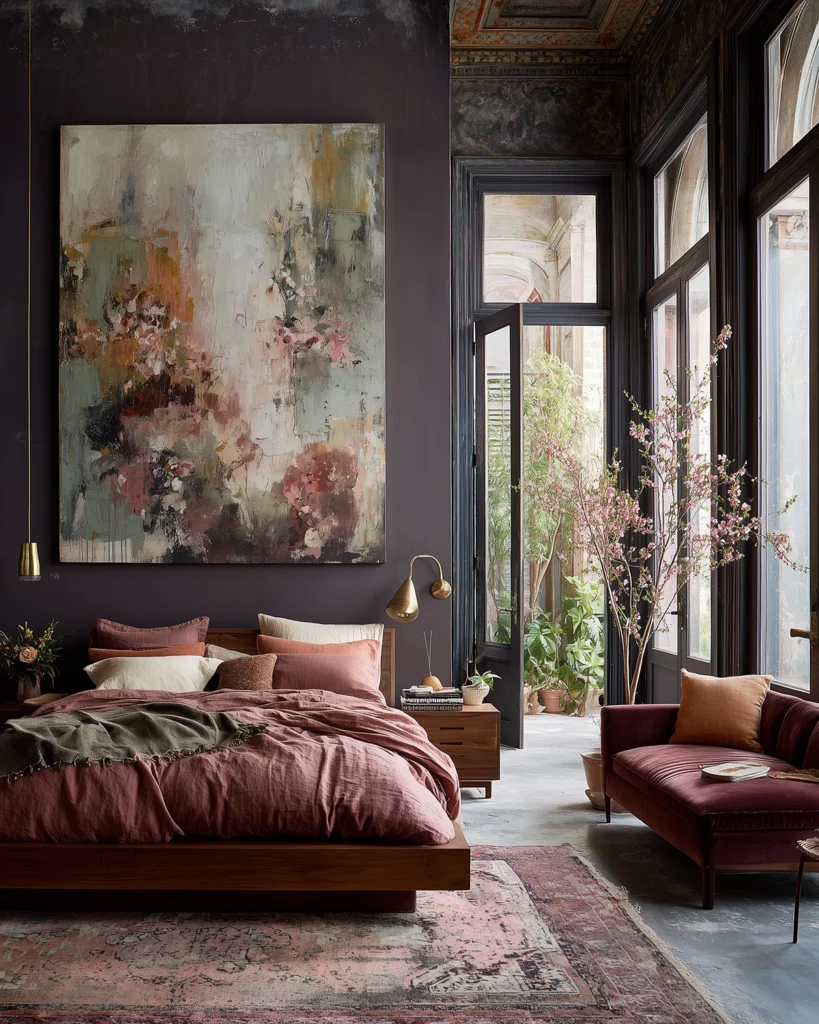
Maybe I’m biased because I design hotels for a living, but hospitality ruins you—in the best possible way. It teaches you that mood has almost nothing to do with how much you can fit into a room.
Think about it. A hotel has one chance to make you feel something. You walk in, drop your suitcase, and within seconds you’ve decided whether the room feels luxurious, cozy, romantic, or forgettable. It has to tell that story with surprisingly few objects.
Why? Because every object costs money to buy, time to clean, and effort to maintain. Housekeeping has to dust it, reset it, and put it back in exactly the right place day after day. There isn’t room for decorative filler.
So the atmosphere has to come from somewhere else.
From materials that age beautifully. From lighting that makes you exhale. From contrast. From texture. From restraint. From one incredible vintage chair instead of six mediocre accessories.
Is Dark Cottagecore A Good Style Choice for Your Home?
You think rainy days are cozy.
You’d rather read by lamplight than under recessed lighting.
Your idea of a perfect afternoon involves an old bookstore, a crackling fire, or wandering through a mossy garden.
Dark Cottagecore appeals to people who crave warmth over perfection, atmosphere over trends, and homes that feel layered with history. It’s less about following an aesthetic and more about creating a space that slows you down the moment you walk through the door.
If that sounds suspiciously like your personality, there’s a reason Dark Cottagecore feels so appealing. It’s a style built around atmosphere, comfort, and the quiet beauty of things that age well.
The Recipe for a Dark Cottagecore Home
Every design style has a recipe.
Dark Cottagecore isn’t just painting your walls green and scattering a few antiques around the room. It’s a carefully balanced mix of color, texture, lighting, furniture, and nature. Each ingredient plays a role. Leave one out, and the feeling changes. Get them working together, and your home starts to feel warm, layered, and quietly mysterious.
Here are the ingredients that define the Dark Cottagecore style:
1. A Rich, Nature-Inspired Color Palette
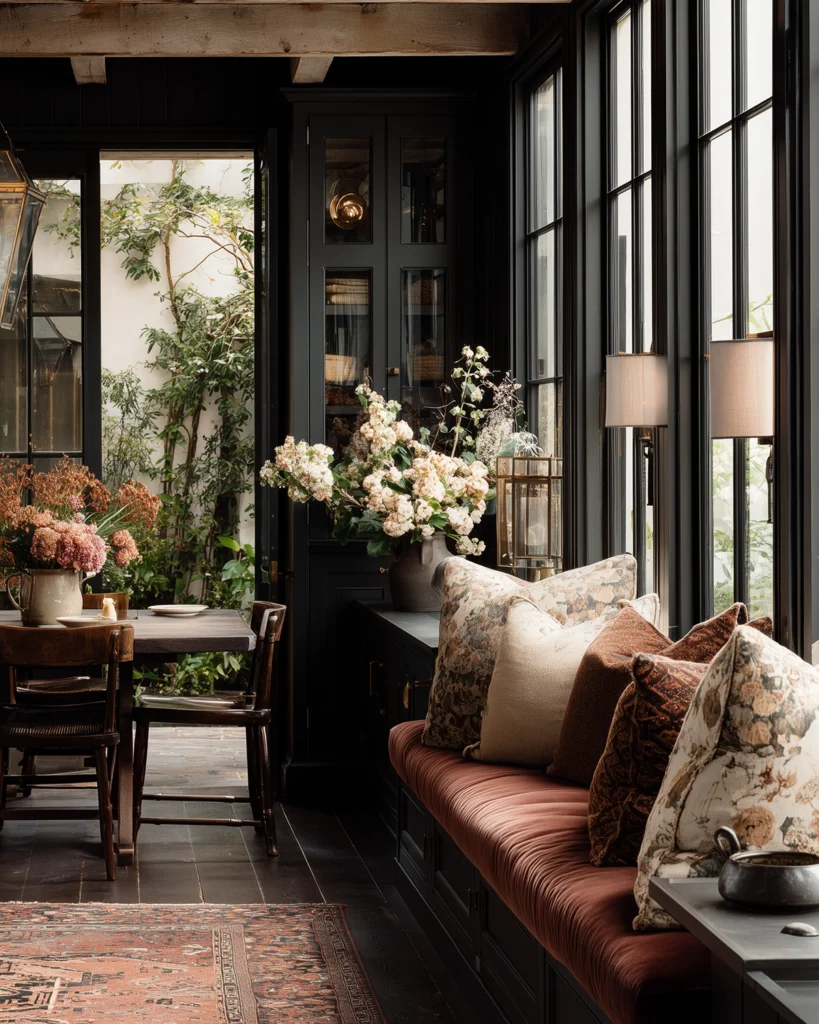
Forest green. Moss. Mushroom. Charcoal. Aubergine. Deep browns. Warm creams. The palette should feel borrowed from the forest floor, not a paint fan deck.
2. Furniture with History
Dark Cottagecore loves pieces that look like they’ve lived a life. Think turned wood legs, aged finishes, rolled arms, vintage cabinets, and furniture that feels collected instead of bought as a matching set.
3. Texture Over Trends
Linen. Wool. Velvet. Worn leather. Weathered wood. Stone. The richness of Dark Cottagecore comes less from color and more from layering natural materials that invite you to reach out and touch them.
4. Warm, Layered Lighting
No single overhead light can create this mood. Table lamps, wall sconces, candles, and warm bulbs create the soft pools of light that make Dark Cottagecore feel intimate and inviting.
5. Nature, But Slightly Wild
Skip the perfectly pruned fiddle leaf fig. Dark Cottagecore feels more at home with trailing ivy, ferns, moss, foraged branches, dried botanicals, and flowers that look like they came from a walk through the woods rather than the grocery store.
Like any good recipe, it’s not one ingredient that makes the magic. It’s how they all come together.
Bringing Dark Cottagecore Into Your Home
Here’s the good news: you don’t need to live in a 200-year-old English cottage to embrace Dark Cottagecore.
The magic isn’t in the architecture. It’s in the choices you make.
Maybe that means painting your walls a rich moss green instead of bright white. Maybe it’s swapping chrome for aged brass, replacing a glass coffee table with warm wood, or layering table lamps instead of relying on one overhead light. Small changes, thoughtfully repeated, create far more atmosphere than buying a room full of themed décor.
The Biggest Dark Cottagecore Mistakes
Dark Cottagecore is all about atmosphere. The trouble is, atmosphere is surprisingly easy to overdo. Here are the mistakes I see most often—and how to avoid them.
1. Confusing Moody with Dark
Dark Cottagecore isn’t about making every surface black. In fact, a room that’s too dark often feels flat instead of inviting. The magic comes from contrast: deep greens against warm creams, dark wood paired with soft linen, candlelight bouncing off aged brass. Without those lighter moments, the room loses its warmth.
2. Decorating Like It’s Halloween
This one happens more than you’d think.
Ravens, potion bottles, faux skulls, black lace, and witch hats belong in seasonal decorating, not timeless interiors. Dark Cottagecore borrows its mystery from nature and history—not a haunted house.

3. Buying “Cottagecore” Rather Than Collecting It
The quickest way to make a room feel inauthentic is to buy everything from the same collection.
The best Dark Cottagecore homes feel as though they’ve established a collection over time. An antique beside a modern lamp. A handmade ceramic bowl on an old wooden table. A room with history always feels richer than one built from a shopping cart.
4. Forgetting to Edit
Dark Cottagecore celebrates collected spaces—but collected isn’t the same as crowded.
Every shelf doesn’t need a stack of books, a candle, a plant, and a brass bird. Leave breathing room between your favorite pieces. They’ll have far more impact when they aren’t competing for attention.
5. Ignoring the Lighting
You can choose all the right colors and furniture, but if your room is lit by one cool-toned ceiling fixture, the atmosphere disappears.
Dark Cottagecore comes alive through layered lighting. One big light in the ceiling completely kills the vibe. You want ambiance: floor lamps, table lamps, candlelight. If there’s one thing worth investing in, it’s your lighting.
FAQ’s About the Dark Cottagecore Interior Design Style
What is dark cottagecore?
Dark cottagecore is the moodier, more grown-up side of cottagecore. It keeps everything we love about the original—nature, nostalgia, craftsmanship, old things with good stories—but trades the pastels and sweetness for mossy greens, rich woods, aged brass, rumpled linen, deeper florals, and rooms with a little more mystery.
What’s the difference between dark cottagecore and regular cottagecore?
They’re romanticizing the same countryside—just at different times of day. Traditional cottagecore tends to be lighter and sweeter: creamy colors, ditsy florals, pale woods, gingham, wildflowers, and plenty of sunshine. Dark cottagecore keeps the nostalgia and connection to nature but turns up the depth with mossy greens, walnut woods, aubergine, aged brass, heavier textiles, and a little more shadow.
How do you decorate a home in the dark cottagecore style?
Don’t copy and paste the same formula into every room. Let the bedroom feel cocooning, the living room inviting, the kitchen earthy and alive, and the bathroom a little more indulgent. Keep the thread consistent through rich color, natural materials, vintage pieces, and atmospheric lighting; but let each room have its own personality.
I break down exactly how I’d approach each space in my Dark Cottagecore Room-by-Room Guide.

What materials work best for dark cottagecore interiors?
Anything that looks better after someone has owned it for twenty years.
Wood with visible grain. Rumpled linen. Wool. Stone. Leather. Velvet. Handmade pottery. Unlacquered brass that is actually allowed to tarnish instead of being polished within an inch of its life.
Dark cottagecore loves materials that tell on you. Scratches, wrinkles, patina, fading. Those details aren’t damage, they’re character.
Can dark cottagecore be modern?
Absolutely! And honestly, that’s my favorite version of this style. Some of the most interesting dark cottagecore interiors aren’t cottages at all. They’re modern rooms with old things in them: a contemporary sofa beside an antique table, sleek cabinetry against aged stone, a modern light fixture hanging over battered wood.
That tension is what keeps the aesthetic from becoming cheesy. Your house doesn’t need to look 200 years old. It just needs to look like it has lived a few good stories.

Will dark cottagecore make my room feel small or gloomy?
Only if you confuse dark with dim. Deep olive walls, walnut woods, aubergine textiles, and charcoal paint can actually make a room feel more enveloping and intentional—especially when they’re balanced with warm linen, natural stone, reflective metals, and plenty of good light.
And I wouldn’t obsess over making a small room look bigger. Sometimes the better move is to let it be small and make that the entire point. Wrap it in color. Layer the textures. Turn it into a jewel box.
Not every room needs to feel bigger. Some rooms just need to feel better.
Do I need an old house or a cottage to pull off a Dark Cottagecore look?
Not even slightly. In fact, I love dark cottagecore even more when it has something modern to push against. Clean architecture makes weathered wood, antique furniture, rumpled linen, aged brass, and moody color feel intentional instead of like you’re auditioning for a period drama.
Don’t try to fake architectural history your house doesn’t have. Build the feeling through materials, color, lighting, art, and pieces that bring a little age into the room.
What colors work best for dark cottagecore?
Steal them from outside. Moss. Bark. Mud. Mushrooms. Wine. Dried leaves. Storm clouds. That mesmerizing shade of green a forest turns right before it rains.
In actual paint terms, think olive, chocolate, walnut, aubergine, burgundy, rust, charcoal, muddy taupe, and warm cream. And don’t make everything dark. You need pale linen, stone, plaster, and natural light to give all those beautiful moody colors something to push against.
Remember: You need the light to appreciate the shadows.
How do you make dark cottagecore look luxurious instead of kitschy?
Stop adding clutter. You don’t need six apothecary bottles, a mushroom lamp, faux moss, a raven candleholder, and a sign informing everyone that they’re in a cottage.
Put that energy into one incredible antique cabinet. Beautiful linen curtains. A vintage rug. Great lighting. Real wood. Oversized art. Materials with some age and soul.
Your Next Move: Get the Cottagecore Look
You’ve seen the rooms. You’ve got the ideas. And there’s a decent chance you’re now looking suspiciously at something in your own house thinking, well, that’s going to have to change.
There’s really no going back.
Grab my free Modern Cottagecore Aesthetic Guide before you start. It’s the palette, materials, textures, and designer details behind the look—all in one place, ready for whenever inspiration turns into action.
Consider this your parting gift for making excellent decorating life choices.
Want Even More Cottagecore?
→ Modern Cottagecore Aesthetic: Interior Design + Styling Ideas
Dark cottagecore’s lighter, earthier cousin—and proof that cottagecore can grow up without losing the romance.
→ Modern Cottagecore Color Palettes
Six palettes that actually work, plus the surprisingly fine line between earthy and sophisticated and why does my living room look like mud?
→ Dark Cottagecore Room-by-Room Guide (coming soon!)
Okay, you love the aesthetic. But what does that actually mean for your bedroom? Your kitchen? Your bathroom? This is where we take dark cottagecore off the mood board and into the house.
→ Room Roast: The Frill of It All
What happens when cottagecore has one ruffle too many. We kept the charm, killed the clutter, and gave this bedroom its dignity back. Click the link below to see this dramatic makeover.
Your Cottagecore Era Starts Here
Dark Cottagecore isn’t about making your home feel darker.
It’s about making it feel warmer, quieter, and more intentional.
The best Dark Cottagecore homes feel as though they’ve evolved over time, not arrived all at once. That’s the difference between a room that looks like a trend and one that feels like it has a story to tell.
