
TL;DR: What’s the best way to find your interior design style: an interior design style quiz or Pinterest? I’ve watched thousands of design students try both, and the answer is more interesting than you’d think.
If you’ve ever tried to figure out your interior design style, chances are you’ve already done at least one of two things.
You took an online style quiz. Or you started a Pinterest board. Okay, maybe both.
At first, taking these first steps feels promising. The quiz tells you you’re Organic Modern. Pinterest fills up with beautiful kitchens, cozy bedrooms, and living rooms you’d happily move into tomorrow.
But then something funny happens.
You go shopping. And somehow, it’s not quite as easy as you expected. Your confidence starts to waver.
You still don’t know if that chair belongs in your house. You still hesitate over paint colors. You still find yourself saying, “I know what I like… I just don’t know how to make it all work together.”
If that sounds familiar, here’s the good news: neither the quiz nor Pinterest failed you.
But they were only a partial answer to your question.
Think of it this way: a style quiz gives you the name of the dish. Pinterest shows you pictures of dishes you’d happily order. But neither one necessarily gives you the recipe.
And without the recipe, you’re left trying to reverse-engineer the whole thing from some airbrushed photos.
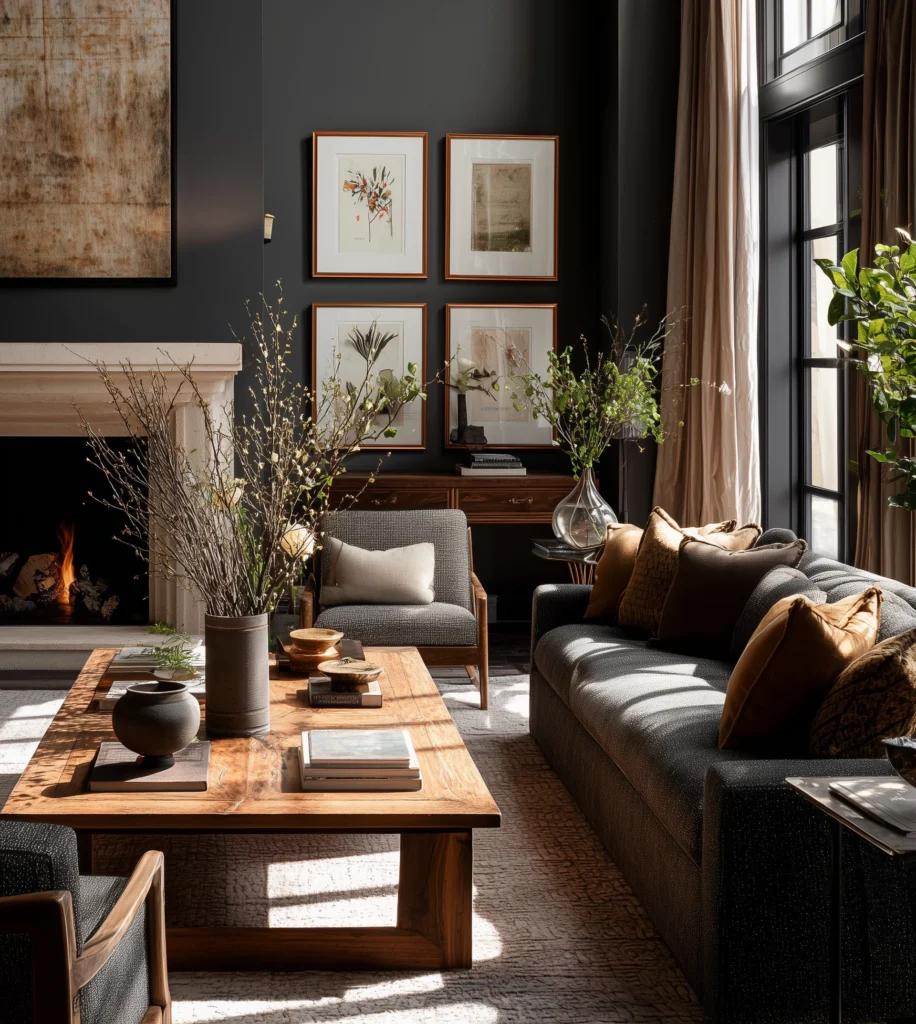
So why is it so hard to find your interior design style?
You know you like Organic Modern. You can recognize it when you see it. But what actually makes it work? Is it the warm woods? The earthy palette? The mix of clean lines and organic shapes? The restraint? And, more importantly, which of those ingredients are the ones you actually like?
Because that’s where your personal style starts to emerge.
The goal isn’t just to figure out what to call your style. It’s to understand the ingredients well enough that you can make it yourself.
The Missing Step in Finding Your Interior Design Style
Hi, I’m Sarah, an interior designer and hotel designer, and I’ve taught more than 40,000 students about design. So I’ve seen this particular problem a lot: people who have excellent taste, plenty of inspiration, and absolutely no idea whether they should buy the chair.
The problem usually isn’t a lack of style. It’s that no one has taught them how to translate what they like into actual design decisions.
I also happen to love both style quizzes and Pinterest. I use them. I recommend them. I just don’t think either one is the whole recipe.
So let’s look at the two most common ways people try to figure out their interior design style, what each one gets right, and where each one leaves you standing in the kitchen without a recipe.
The Interior Design Quiz Gets You Started
I actually love design quizzes.
Not because I think a ten-question quiz can perfectly capture your style, but because it’s one of the fastest ways to give people a place to begin.
I love interior design quizzes so much that I made one for you, and you can take it right here:
Most homeowners don’t have a decorating problem. They have a vocabulary problem.
Take this question, for example: What’s the difference between Modern and Contemporary design?
If your answer is, “Wait. Those aren’t the same thing?” Exactly.
Modern design comes from the 1950s. You’ve heard of Mid-Century Modern, right? There’s your clue.
Contemporary means now. It changes as design changes. What looked contemporary twenty years ago doesn’t necessarily look contemporary today.
One is an actual design style. The other is basically a moving target.
And this is why I love a good design quiz.
It gives you vocabulary for things you already recognize but may not know how to name. Suddenly you can look at a room and understand why those clean lines, warm woods, and tapered legs keep showing up in everything you save.
You’re not just saying, “Ooh, I like that.” You’re starting to understand what you like.
That’s a big deal. But wait…there’s a catch.
Knowing the vocabulary doesn’t decorate the house. It tells you the name of the dish. It still doesn’t give you the recipe.
Pinterest Is Great at Saving Rooms.
But it’s Terrible at Explaining Them.
Pinterest is where we all become optimistic.
“I’ll just save a few ideas…”
Five hundred pins later, you’ve somehow planned a kitchen renovation, a trip to Italy, and a wedding you aren’t even having.

Pinterest is phenomenal at collecting inspiration because it removes the pressure to make decisions. You simply save what catches your eye.
The problem is that Pinterest never asks why. Why did you pin that room? Was it the oak floors? The soft plaster walls? The symmetry? The oversized artwork?
Or was it simply the feeling the room gave you?
Without asking those questions, Pinterest becomes a beautiful storage unit for inspiration. You can get very good at recognizing rooms you love without getting any better at creating one yourself.
The Missing Step in Finding Your Interior Design Style
I’ve taught interior design to more than 40,000 students. And early on, I started noticing a problem I couldn’t explain.
Every class followed the same process.
First, I’d have everyone take my Interior Design Style Quiz. It was a great starting point. Suddenly people had language for what they were drawn to. They’d discover they leaned toward Organic Modern, Scandinavian, or Cottagecore, and you could almost see the relief wash over them.
“Finally,” they’d say. “Now I know my style.”
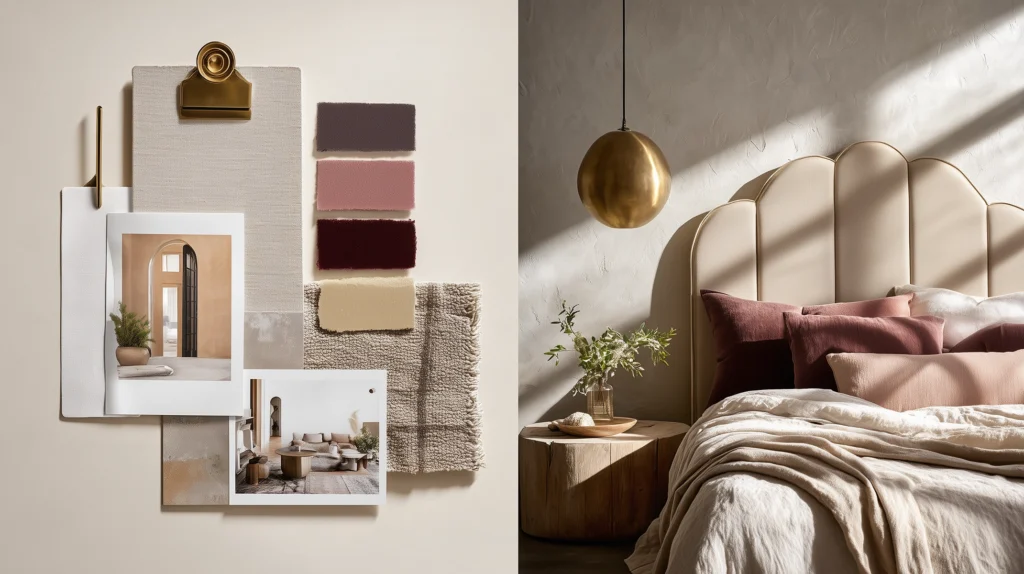
Next came the mood boards.
Not just any mood board. I wanted them to immerse themselves in their chosen aesthetic. If they were Modern Farmhouse, I wanted them pinning Modern Farmhouse. If they were Scandinavian, I wanted Scandinavian. The idea was to train their eye by surrounding themselves with examples of one style done well.
And it worked. They’d come back with beautiful boards.
Honestly, they crushed it. The colors made sense. The rooms felt cohesive. You could see their instincts starting to emerge. I’d grade them, hand them back, and think, Okay… they’ve got it.
Then came the next assignment. Design a room. And suddenly, everything fell apart. The questions started immediately.
Students who had just aced the quiz and created beautiful mood boards still second-guessed every furniture purchase. Suddenly, they couldn’t decide between two sofas. They’d ask if a certain light fixture “worked,” even after they’d supposedly identified their style. They knew the name of their style, but they didn’t yet know how to think like a designer.
At first, I assumed the quiz needed work. Or maybe Pinterest was sending people in too many directions. Perhaps I hadn’t explained the styles clearly enough?
But after watching this happen class after class, I realized something much bigger.
The quiz gave my students a language for their style. Pinterest showed them hundreds of beautiful examples of it.
But neither one taught them how to turn inspiration into decisions.
How do you look at a room you love and figure out why it works? How do you pull out the colors, materials, shapes, and details that matter to you, then use them to choose a sofa, a paint color, or a light fixture for your own home?
That was the missing step.
So I created a simple tool to bridge the gap between “I know what I like” and “I know how to bring it home.”
It’s not another quiz. And it’s definitely not another Pinterest board.
I call it the Interior Design Style Journal, and it completely changed the way I teach people to find their style.
In the next post, I’ll show you exactly how it works, and why I think it’s the piece most people are missing when they try to figure out their interior design style.
