TL;DR – If you’ve ever fallen in love with a chair, only to wonder why it looked so much better in the showroom, this one’s for you. Just because something looks great in the store doesn’t mean it belongs in your home. Here’s why impulse buys derail great design, and what to do instead.
We’ve all been there. You walk into a store, see something you like, and think, “This would look great in my living room!” Before you know it, you’ve got a cart full of random items that caught your eye. But when you get home and try to fit them into your existing decor, something just feels off. It’s frustrating, and it can leave you wondering what went wrong.
Warning: Impulse buys can sabotage your interior design style! I’m here to show you a better way that can help you avoid a decorating disaster and set you up for style success!
The “It Looked Better in the Store” Problem
Ever fallen in love with a piece of furniture, rushed it home, and wondered, What happened?
It wasn’t the sofa. It was the showroom.
Retailers spend months designing spaces that make every piece look irresistible. The lighting is perfect. The colors are coordinated. The scale is just right. Every accessory has a purpose. You’re not buying a chair. You’re buying the feeling the entire room creates.
Then it arrives at home and has to fend for itself.
At home, that same piece has to compete with your existing furniture, wall color, flooring, and the realities of everyday life. That’s why designers don’t shop piece by piece. They start with a plan. When every decision supports the bigger picture, your home begins to feel as intentional as the showroom that convinced you to buy it in the first place.
Impulse Buys Ruin Interior Design: A Threat to Your Home’s Aesthetic
Spontaneous shopping sprees can sabotage your style and wreck your interior design vibe, turning your home into a mishmash.
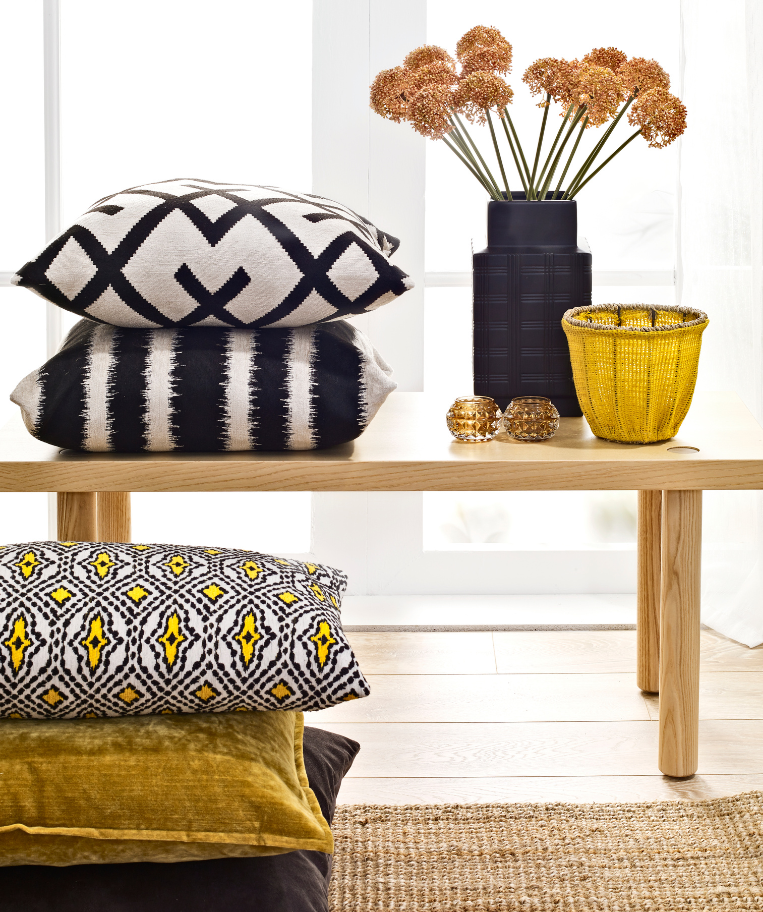
Decorating Style Sabotage
The common belief is that you can just go out and buy things you like, and they’ll magically come together to create a beautiful home.
I get it, you see the gorgeous displays at West Elm or Anthropologie Home, and they’re enticing!
Unfortunately, this couldn’t be further from the truth. While it’s important to choose items you love, decorating without a cohesive design style can lead to a disjointed and chaotic look. It’s like throwing a bunch of random ingredients into a pot and hoping to end up with a gourmet meal. That random recipe mash-up rarely turns out well!
The Hazards of Designing Around Trends
Another trap people fall into is trying to incorporate the latest trends into their homes. Trends are fun and can add a fresh look to your space, but if they don’t align with your overall design style, they can end up feeling out of place. Plus, trends come and go, and what’s hot today might be passé tomorrow. You want a home that feels timeless and uniquely yours, not just a collection of what’s currently popular.
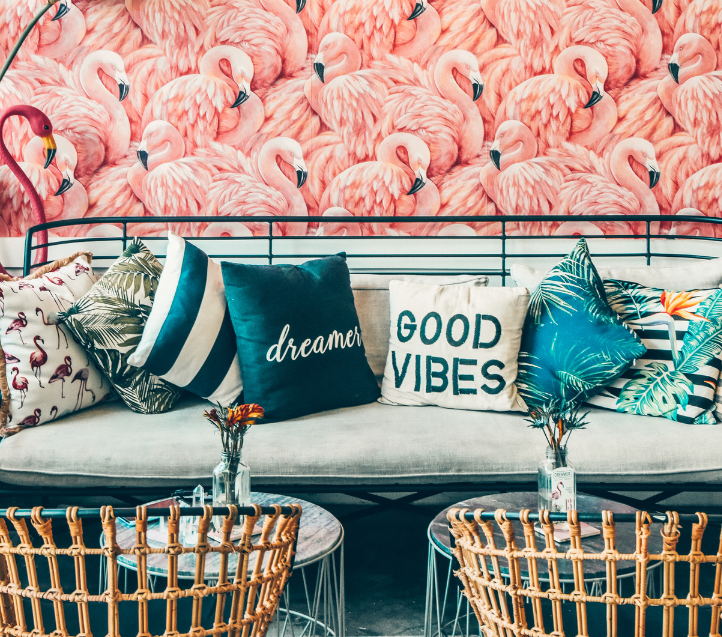
Now, don’t get me wrong. I love design trends (and also love flamingos – in small doses!) and think trends are key to keeping your home feeling fresh and current. But – tune in, as this is really important! They should be the icing on the cake. You layer them on top of the overall design style you’ve established. They don’t drive the overall direction for the style of your home.
What is a Design Style?
So, what exactly is a design style? In simple terms, a design style is a set of guidelines, characteristics, and visual elements that define the look and feel of a space. Think of it as a theme or a cohesive vision that guides your decorating choices. Each design style tells a story and evokes a particular mood or atmosphere.
For example, the Bohemian style, often referred to as “Boho,” is known for its eclectic mix of colors, patterns, and textures. It celebrates individuality and creativity, often incorporating items from various cultures and eras.
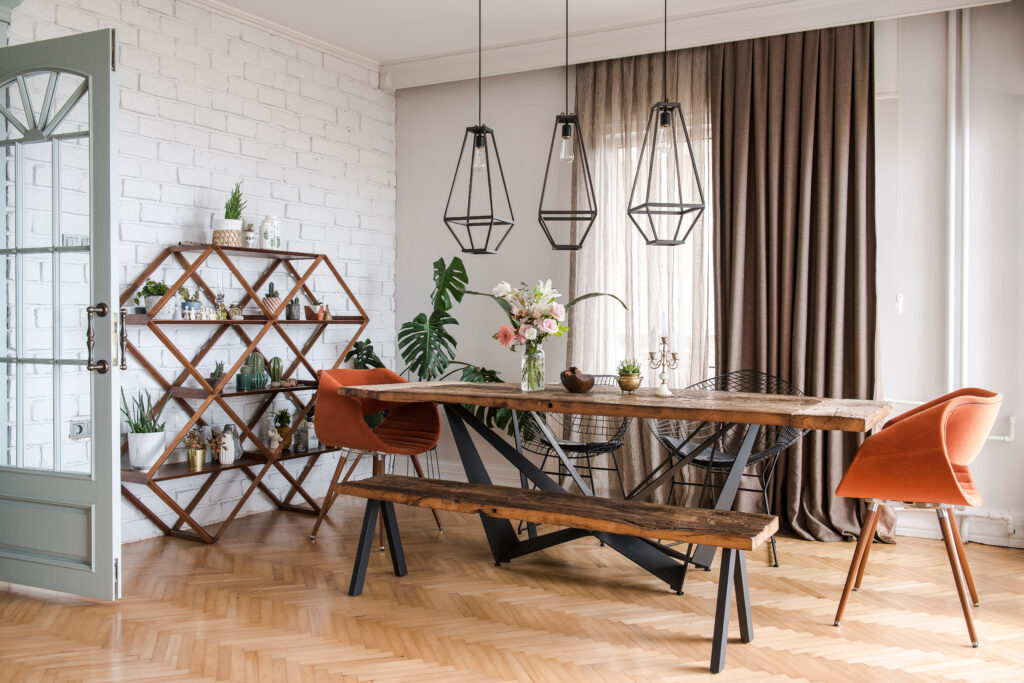
On the other hand, the Industrial style is inspired by old factories and warehouses, featuring raw materials like exposed brick, metal, and wood. It has a rugged, unfinished look that exudes a cool, urban vibe.
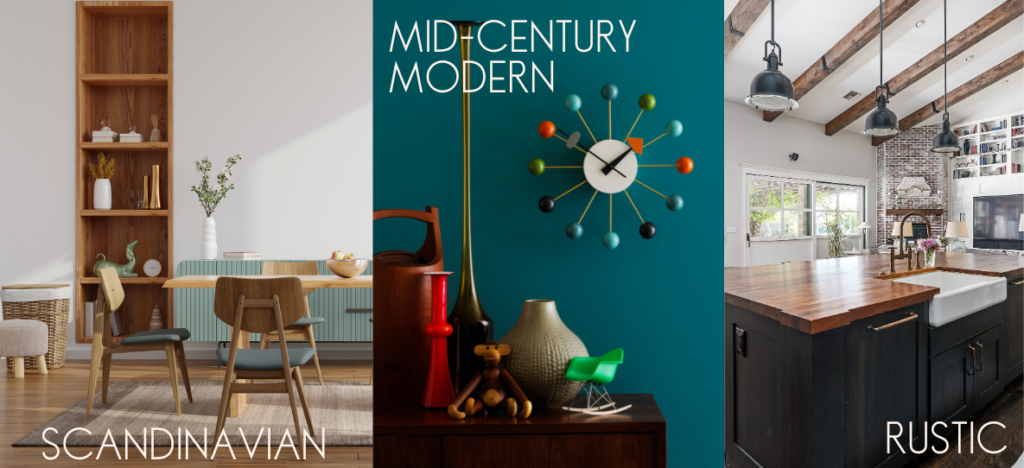
Other popular design styles include:
- Scandinavian is known for its simplicity, functionality, and connection to nature. This style uses light colors, natural materials, and minimalistic forms to create a calm and serene environment.
- Mid-Century Modern is characterized by clean lines, organic curves, and a mix of natural and man-made materials. This style often features furniture with tapered legs and minimal ornamentation.
- Rustic combines rustic charm with modern comforts. This style uses warm, earthy colors, vintage accessories, and reclaimed wood to create a cozy, lived-in feel.
Why Design Styles Matter
Choosing a design style is like creating a roadmap for your home decor. It guides your decisions and ensures that everything you bring into your space works together harmoniously. Each design style has its own set of rules and elements that make it unique. By sticking to a particular style, you can create a cohesive look that feels intentional and well-thought-out.
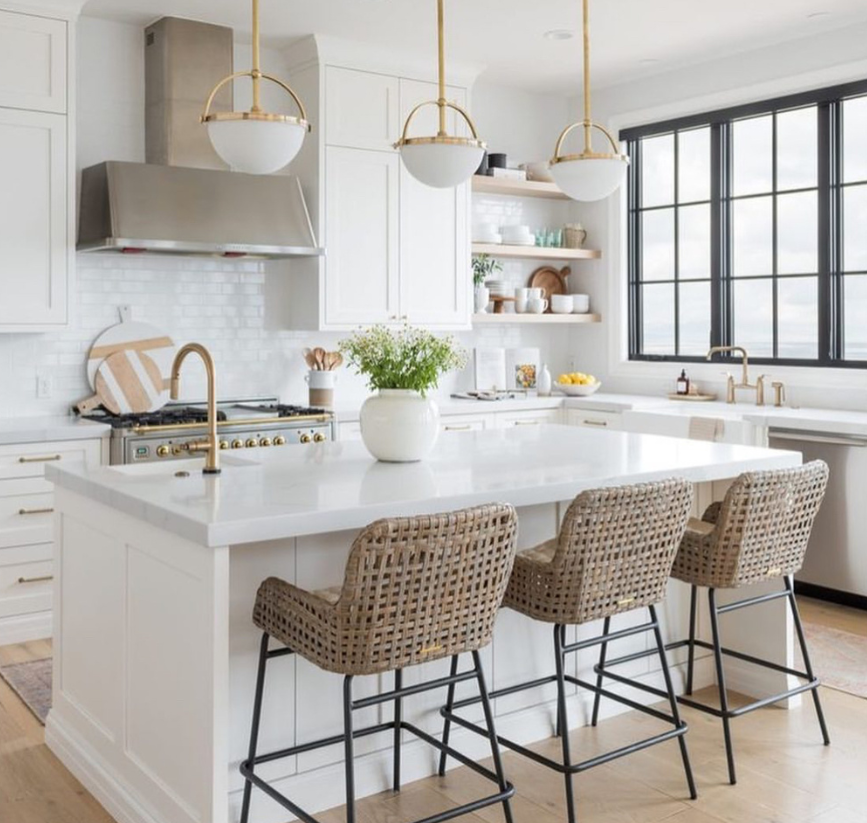
For instance, if you love the clean lines and functional beauty of Scandinavian design, you wouldn’t want to clutter your space with heavy, ornate furniture. Instead, you’d choose pieces that are simple, functional, and made from natural materials. This consistency helps create a space that feels calm and cohesive.
How to Choose an Interior Design Style (and Stick to It)
To successfully implement a design style in your home, you need to understand its core principles and key elements. Why? Because every single element in your home should reflect one signature style – otherwise, your home can look disjointed and out of sync.
And if you need some help and are stuck wondering why you can’t pick your interior design style, read this post.
Let’s take the Scandinavian style as an example. And I’ll break down how that style plays out in each aspect of the design within your home.
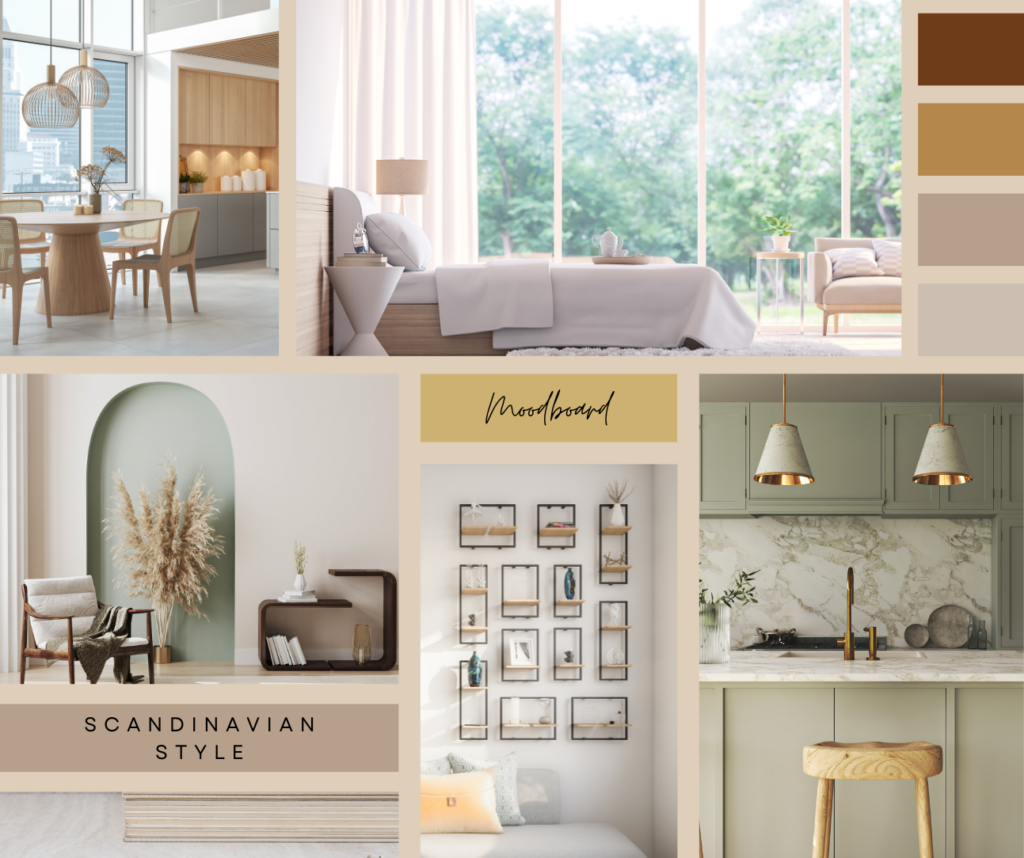
Here’s a step-by-step guide to how you’d bring the Scandinavian style into your home:
- Color Palette: Start with a neutral color palette. Whites, grays, and light wood tones are the foundation of Scandinavian design. These colors create a bright and airy feel, which is essential for this style.
- Furniture: Choose furniture with clean lines and simple forms. Look for pieces that are functional and made from natural materials like wood. Avoid overly ornate or bulky furniture.
- Materials: Incorporate natural materials wherever possible. Think wooden floors, wool textiles, and stone surfaces. These materials add warmth and texture to the space.
- Lighting: Lighting is crucial in Scandinavian design. Use a mix of natural light and strategically placed artificial lighting. Pendant lights, floor lamps, and wall sconces can help create a warm and inviting atmosphere.
- Decor: Keep decorations minimal and purposeful. A few well-chosen accessories, like a piece of abstract art or a vase with fresh flowers, can add personality without overwhelming the space.
Do you see how every single design aspect has been intentionally curated to reflect this one style? Each design decision has been made to embody the simplicity and functionality of Scandinavian design.
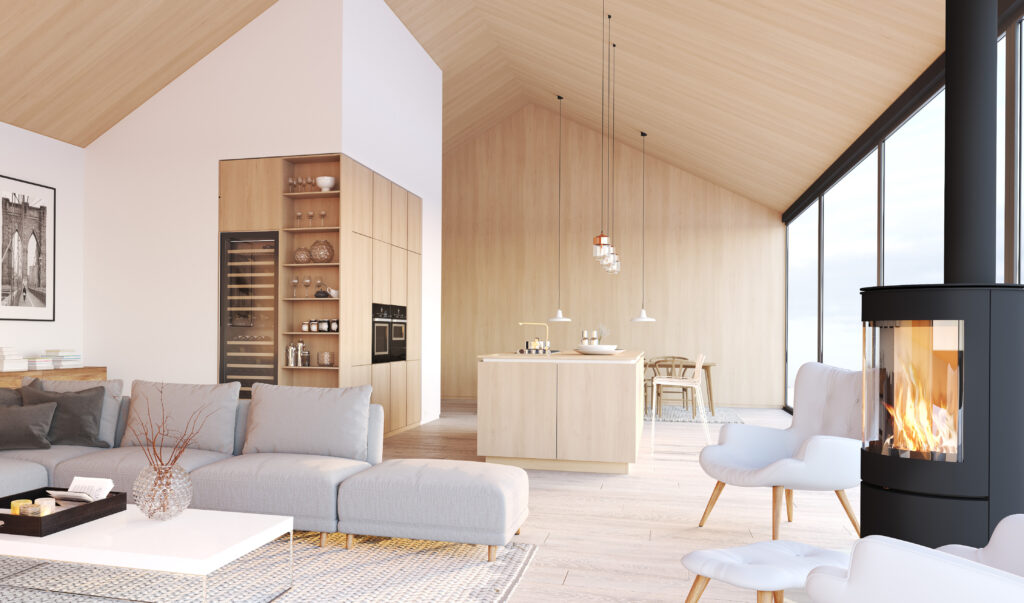
The key is to stay true to the principles of the style and ensure that every element you introduce supports the overall look and feel.
The Complexity of Design Styles
Understanding the differences between design styles isn’t always straightforward. Each style comes with its own set of principles, historical context, and key elements. For example, the rustic charm of a farmhouse style is quite different from the sleek sophistication of mid-century modern. Recognizing these nuances can be challenging without some guidance.
Professional interior designers spend years learning about these styles, studying their origins, and mastering the art of combining different elements to create beautiful spaces. They know that every detail, from the color palette to the choice of materials, plays a crucial role in achieving a cohesive look.
Introducing The Interior Design Style Journal
Now, don’t worry if you’re starting to feel overwhelmed. I’ve got you!
This is where “The Interior Design Style Journal” comes in handy. My book is designed to make the complex world of interior design styles accessible to everyone. It provides clear, easy-to-understand overviews of various styles, complete with stunning photos and practical checklists.
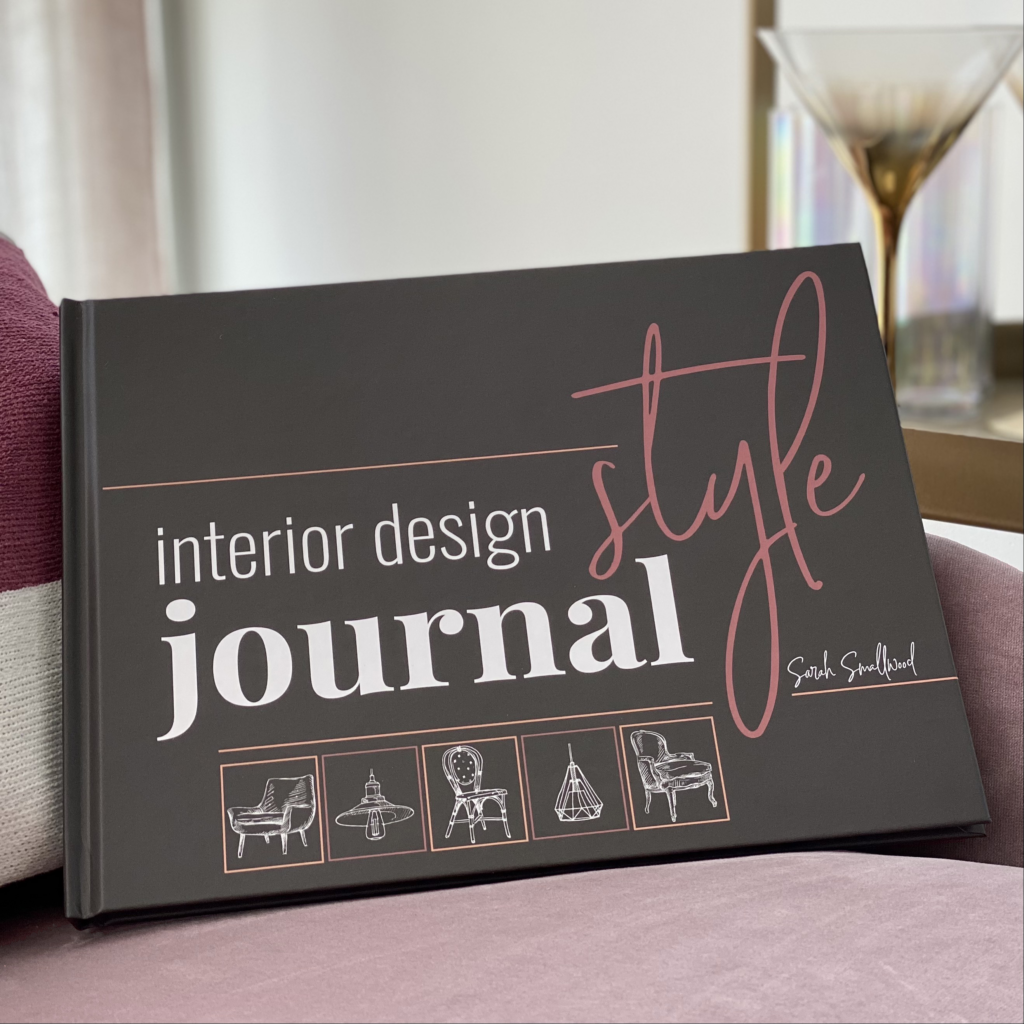
With “The Interior Design Style Journal,” you’ll have a valuable resource at your fingertips. Whether you’re drawn to the rustic charm of farmhouse decor or the sleek lines of modern design, my book will help you understand the key elements and principles of each style. You’ll learn how to identify the right pieces, blend them seamlessly, and create a space that feels both beautiful and cohesive.
By following the step-by-step guides and using the checklists provided, you can confidently shop for items that fit your chosen style, avoiding the pitfalls of random purchases and fleeting trends. You’ll be able to create a home that truly reflects your personal taste and feels like a harmonious, well-designed space.
Click here to snag your copy today!
Questions About Shopping for Home Decor
Why do I keep buying things I don’t end up loving?
Because you’re shopping for a moment instead of a plan. It’s easy to fall for a beautiful display, but much harder to picture how that piece will live in your home. That’s exactly why we created the Before You Buy Pillows: Interior Design Starter Kit. It’ll help you avoid expensive decorating regrets before they happen.
What’s the first thing I should buy when decorating a room?
Probably…nothing.
Spend time understanding the room first. How do you want it to feel? How will you use it? The best purchase is usually the one you make after you’ve answered those questions.
Why did I love it in the store but not at home?
You fell in love with the room, not just the furniture. Showrooms are carefully designed to create a specific mood, making every piece look its best. At home, that same item has to work with everything you already own.
How do I avoid buyer’s remorse when decorating?
Start with a plan before you start shopping. Knowing your room’s layout, color palette, and overall style makes it much easier to choose pieces that work together instead of chasing whatever catches your eye.
Style Success
The idea that you can just go out and buy random things to create a beautiful home is a myth. Choosing a design style is essential for achieving a cohesive and harmonious look. By understanding the nuances of different styles and using “The Interior Design Style Journal” as your guide, you can create a space that feels both stylish and uniquely yours. Embrace the journey of decorating your home with confidence and ease, and watch as your space transforms into the home of your dreams.
And the next time you’re about to pull out your credit card to purchase some hip home decor, heed my warning of how impulse buys can sabotage your interior design style – and think strategically about your style!
If you want to check out one of today’s trending interior design style, check out this blog post on the Modern Art Deco style.
And if you’re starting a new decorating project, you definitely don’t want to miss this:
→ 10 Decorating Mistakes That Happen Before You Even Pick Paint
Think you’re off to a strong start? Not so fast…
→ Think you know which design rules to follow? A hotel designer reveals the 4 interior design myths most people still believe — and what to actually do instead. Find out which ones are holding your home back.
