
TL;DR: Dreaming of a cottagecore nursery that’s whimsical, but not overdone? Pulling off that dreamy, storybook vibe without veering into craft-fair chaos is absolutely possible. This guide has cottage-inspired nursery ideas that are charming, functional, and designed to grow with your child. Whether you’re into soft florals, vintage wood tones, or just really good wallpaper, you’ll find the inspo (and the strategy) to design a baby room that’s as beautiful in real life as it is on your mood board. Cute but not cliche.
Cottagecore Nursery Aesthetic: What It Is + How to Do It Right
Cottagecore nurseries are having a serious moment — and honestly, it’s not hard to see why. Soft florals, warm natural wood, handmade touches, and that storybook-meets-meadow magic? It’s the antidote to everything sterile, cold, and forgettable about nursery design. Searches for “cottagecore nursery” are climbing fast, and the aesthetic has officially moved from TikTok trend to full-on design movement.
But here’s the thing: the difference between enchanting and overwhelming comes down to how you design it. Because cottagecore, done wrong, is a lot. We’re talking lace on lace on dried floral arrangement on gingham — and suddenly your baby’s room looks like an Etsy shop exploded.
That’s where I come in. After nearly a decade designing family-focused resorts and hospitality spaces around the world, I know how to create rooms that feel magical without feeling chaotic. And the same principles that make a boutique hotel feel like a dream — intention, restraint, layered texture — work just as beautifully in a nursery.
This isn’t just about picking the right floral wallpaper (though we will absolutely talk about that). A child’s room is never “just a room.” It’s their first immersive space — the backdrop for sleep, play, and the slow, gorgeous unfolding of their sense of wonder. Which means the details matter more than you think, and the design choices you make now should be ones you all love for years to come.
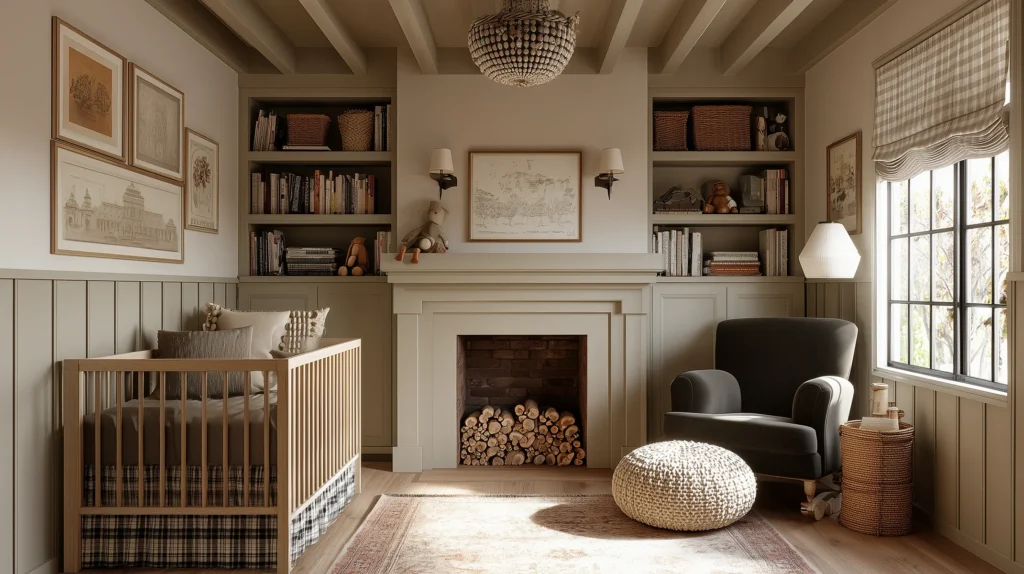
Each idea here is whimsical enough for babyhood, elevated enough to grow gracefully, and always more enchanted English countryside than overstuffed antique shop. Think soft florals, warm wood tones, and just the right amount of whimsy to make this room feel like the best kind of fairytale.
If you’re looking for an overview of the Modern Cottagecore style, you’ll want to check out this post. And if you’re curious about the most beautiful Cottagecore color palettes, click here. And finally, if you want to see a dramatic cottage bedroom transformation, you won’t want to miss my Room Roast: For the Frill of It All – A Cautionary Tale of Ruffles and Restraint.
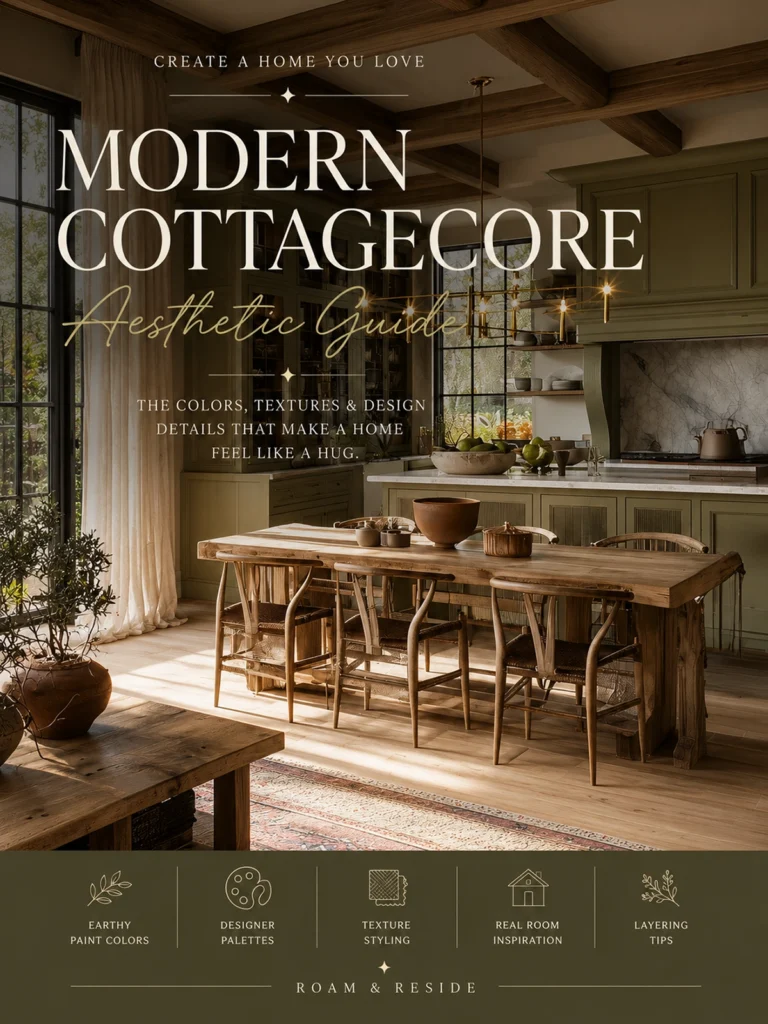
You’re Gonna Want This: Your Cheatsheet to Cozy
The modern Cottagecore aesthetic is a wonderful style to bring into your entire home.
And to make it easy, I’ve created a free room-by-room Cottagecore style guide you can download now.
It’s the key to the whole vibe, laid out room-by-room. With tons of pretty inspo photos you’ll want to copy+paste right into your home.
You can grab it at the link below:
Why a Cottagecore Nursery Is a Great Choice for Your Baby

Cottagecore isn’t just an aesthetic — it’s actually one of the most thoughtfully suited design styles for a baby’s environment. Here’s why it works so well:
It’s built around nature. Cottagecore design prioritizes natural materials — wood, linen, cotton, wicker — over synthetic ones. For a space where a baby will sleep and play, that’s a genuinely good design instinct. Natural textures are softer, warmer, and more sensory-rich than plastic or overly processed materials.
It’s calming by design. The cottagecore color palette — soft greens, warm whites, dusty florals, muted earth tones — is inherently soothing. Soft, nature-inspired palettes are widely considered calming—exactly what you want in a sleep-and-play space.” Translation: this isn’t just pretty. It’s actually good for your baby.
It grows with your child. Unlike trend-heavy nursery themes that feel dated fast (looking at you, chevron everything), cottagecore has the timeless, storybook quality of a classic. A well-designed cottagecore nursery transitions beautifully into a toddler room and beyond — no full redesign required.
It sparks imagination. Botanical prints, woodland motifs, vintage storybooks, handmade details — the visual richness of a cottagecore nursery gives curious little minds a lot to explore. It’s a room that tells a story, and kids respond to that.
It’s endlessly personal. Cottagecore celebrates handmade, vintage, and found objects — which means this is one of the easiest styles to make truly your own without a big budget. A thrifted rocking chair, a hand-me-down quilt,a crochet blanket from grandma, a vintage botanical print. They all belong here.
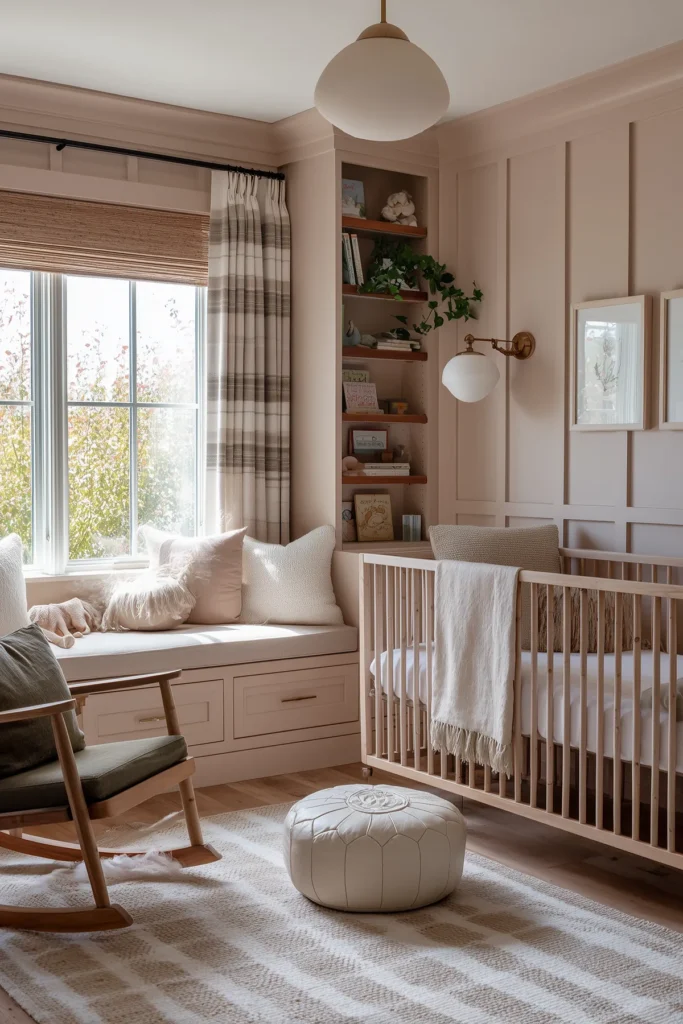
Cottagecore Colors for Baby Rooms
This is where the magic starts — and where a lot of people get it wrong. The cottagecore palette isn’t just “soft and pretty.” It’s specific. It’s warm. And it has a point of view.
The secret? Every color in a cottagecore nursery should feel like it came from somewhere — a meadow, a garden, a worn linen tablecloth that’s been washed a hundred times. Nothing harsh, nothing synthetic, nothing that looks like it was picked from a generic paint chip display with your eyes closed.
Color palettes are everything when designing a cottagecore aesthetic. You can have the prettiest crib, the dreamiest wallpaper, and the most charming little mushroom lamp on Earth—but if the colors are even slightly off, the room goes from storybook to something’s not quite right. It’s an art. And I’m not saying that in a precious way—I’m saying it because cottagecore lives and dies in undertones, warmth, and restraint.
Mastering the art of cottagecore color is complex, but don’t worry. I did a full, dedicated palette color guide to help you master this look. It’ll show you palette combinations that actually work together, and how to choose your version of the look without spiraling. Get all the details here: Modern Cottagecore Color Palettes.
And if you’re specifically wanting to see how to use a soft blush pink palette in a room, check out this post.
But for nurseries, here’s what you really need to know:

1) Start warm. Always
Cottagecore doesn’t do icy whites or cool grays. Your base should feel like warmth lives in the walls—even if it’s “white.” Think creamy, soft, or gently sun-faded. When the base is warm, everything you layer on top (wood, florals, textiles) looks intentional instead of mismatched.
2) Pick one hero color, not five “cute” ones.
This is where nurseries go sideways fast. Cottagecore is already rich with texture and pattern, so your palette needs a clear lead. Choose one main accent color—dusty rose, sage, butter yellow, soft lavender, muted terracotta—and let it show up in a few repeating places (curtains, art, bedding, a lamp). Repetition is what makes it feel designed
3) Muted beats bright. Every time.
If a color looks like it could be on a candy wrapper, it’s not cottagecore—it’s “playroom primary.” Cottagecore colors should look like they’ve been toned down by sunlight and time. Soft. Powdery. Slightly weathered. That’s the magic.
4) Ground it with earthy neutral
Warm mushroom, aged linen, tan, oat, caramel wood tones—these are the quiet anchors that keep the room from feeling too precious. They’re what make cottagecore feel livable, not chaotic.
Always Remember: Calming > Clever
A baby’s room should be soothing first. Cottagecore is perfect for that, as long as you keep the contrast low and the palette cohesive. Warm base, muted accents, soft layers. That’s the recipe.
What not to do: bright white walls. They make warm woods look orange, florals look harsher, and the whole room feel like it’s fighting itself. Cottagecore lives on the warm end of the spectrum—always.
Modern Cottagecore vs. Classic Cottagecore Nursery
Before you fall headfirst into a wicker basket spiral, it helps to know which flavor of cottagecore you’re actually going for. Because yes — there are two, and they’re different enough to matter.
Classic Cottagecore is the full romantic fantasy. We’re talking lace curtains, dried floral arrangements, ruffled crib skirts, vintage everything. It’s grandmother’s cottage meets English countryside. Done well, it’s genuinely enchanting. Done without restraint, it’s a lot to live with — especially at 3am when you’re doing a diaper change and suddenly very aware of all the tchotchkes.
Modern Cottagecore is the edited version. Same warmth, same nature-inspired soul, same love of texture and handmade detail but with cleaner lines, more breathing room, and a design sensibility that knows when to stop. It doesn’t abandon the whimsy. It just gives it some room to breathe.
For a nursery specifically, modern cottagecore tends to age better. It’s easier to transition as your child grows, easier to keep looking intentional, and — let’s be real — easier to actually live in. A room can be deeply charming without having seventeen decorative elements competing for attention.
Here’s Your Cottagecore Nursery Style Cheat Sheet:

Classic Cottagecore Nursery: Lace and ruffles · Dried florals · Vintage crib with ornate detailing · Maximalist layering · Lots of pattern mixing · Candlelit, moody warmth
Modern Cottagecore Nursery: Clean-lined wood furniture · Fresh botanicals over dried · Subtle floral prints · Intentional texture without clutter · Warm neutrals with one strong accent · Boutique hotel meets fairy tale.
Pro Tip: If you can’t tell which camp you’re in, here’s the test: do you want it to look like an antique market followed you home… or like a designer gently said, “Okay, now we stop.” Classic is discovered. Modern is curated. (Note: only one stays cute when your baby graduates to a big-kid bed.)
Cottagecore Nursery Furniture
Here’s the thing about cottagecore nursery furniture: it’s not background—it’s the backbone. In a style where the charm lives in the details, your furniture is doing most of the storytelling. The wood grain. The silhouettes. The soft curves. Get these pieces right and the rest of the room gets a whole lot easier (and looks a whole lot better).
The Crib
This is your anchor. Everything else in the room will be seen in relation to it, so choose it like you mean it.
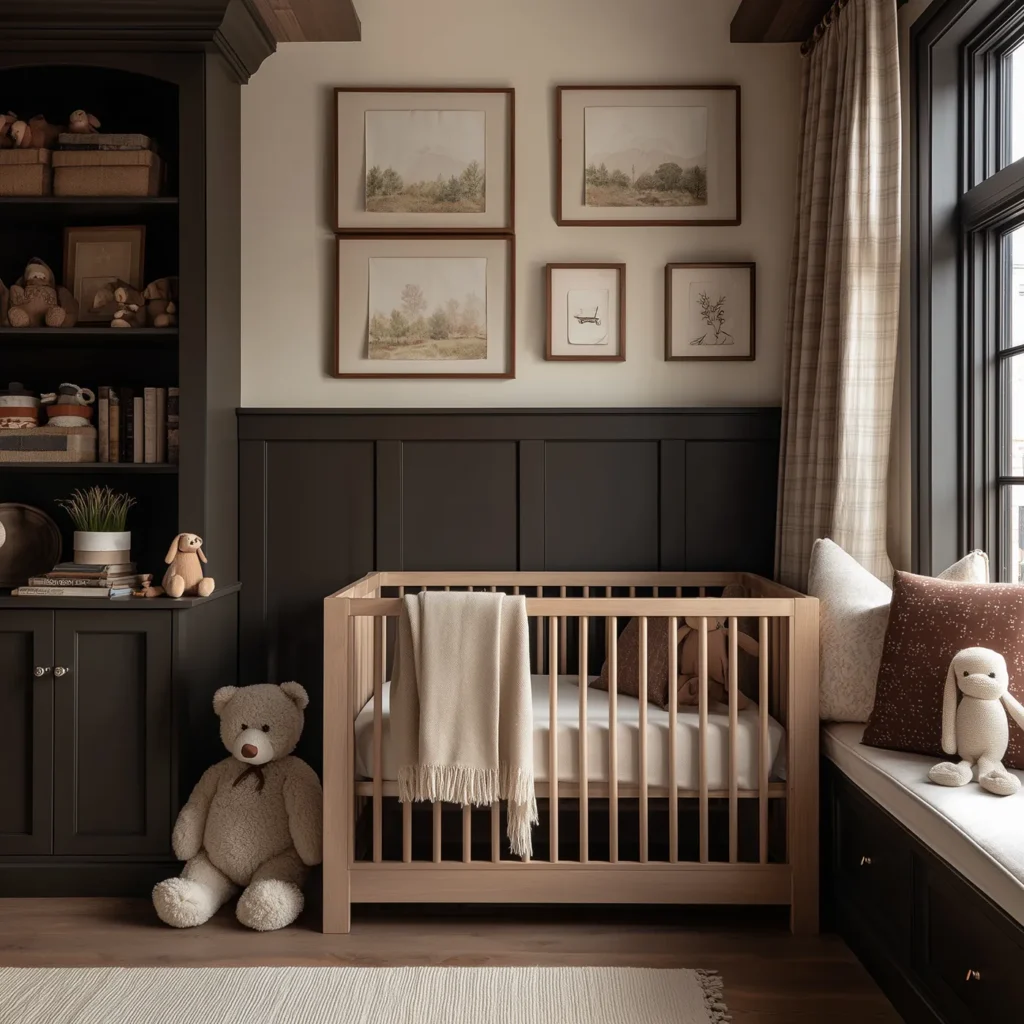
For cottagecore, look for warm wood tones over stark painted white, simple paneling over fussy carving, and a shape that feels timeless—like it could have been passed down, even if it’s brand new (because yes, safety standards exist and we love that for us). Natural oak, warm walnut, or a soft matte finish tends to play nicest with cottagecore palettes and wallpapers.
Convertible cribs are especially smart here—they carry the look forward as your baby grows, so the room doesn’t suddenly feel like it needs a full redesign the minute you switch to a toddler bed.

The Rocker or Glider
You will spend an almost comedic amount of time in this chair. Comfort is non-negotiable. Style is the bonus that makes you feel like you have your life together at 2:00 a.m.
Cottagecore loves a rocker or glider with soft curves and natural materials. Think a wooden frame, gentle lines, and upholstery in linen, cotton, or boucle. Skip anything overly sleek or aggressively modern. If it looks like it belongs in a Scandinavian startup’s waiting room, it’s probably not the right vibe.
The Dresser
In cottagecore nurseries, the dresser is where function meets charm. You want something with a slightly vintage silhouette—rounded corners, warm wood, simple drawer fronts—and hardware that feels classic (aged brass is the obvious yes, but matte black can be chic if the rest of the room is warm).
A dresser that doubles as a changing table is practical genius, and in this style it’s also a styling moment: a small lamp, a framed print, a ceramic dish for the tiny things that multiply overnight. It’s the “collected, not cluttered” zone.

What to Avoid
Cold white laminate. High-gloss anything. Flat-pack pieces that look like they arrived with an Allen key and no soul. Cottagecore furniture should feel like it was made by someone—not manufactured for everyone.
A Note on Mixing
You don’t need a perfectly matched set (and honestly, it often looks less cottagecore when everything matches). A slightly collected mix—like a vintage-leaning dresser with a cleaner-lined crib—usually feels more authentic. The rule is simple: keep the finishes warm, the shapes soft, and make sure everything feels like it belongs to the same story.
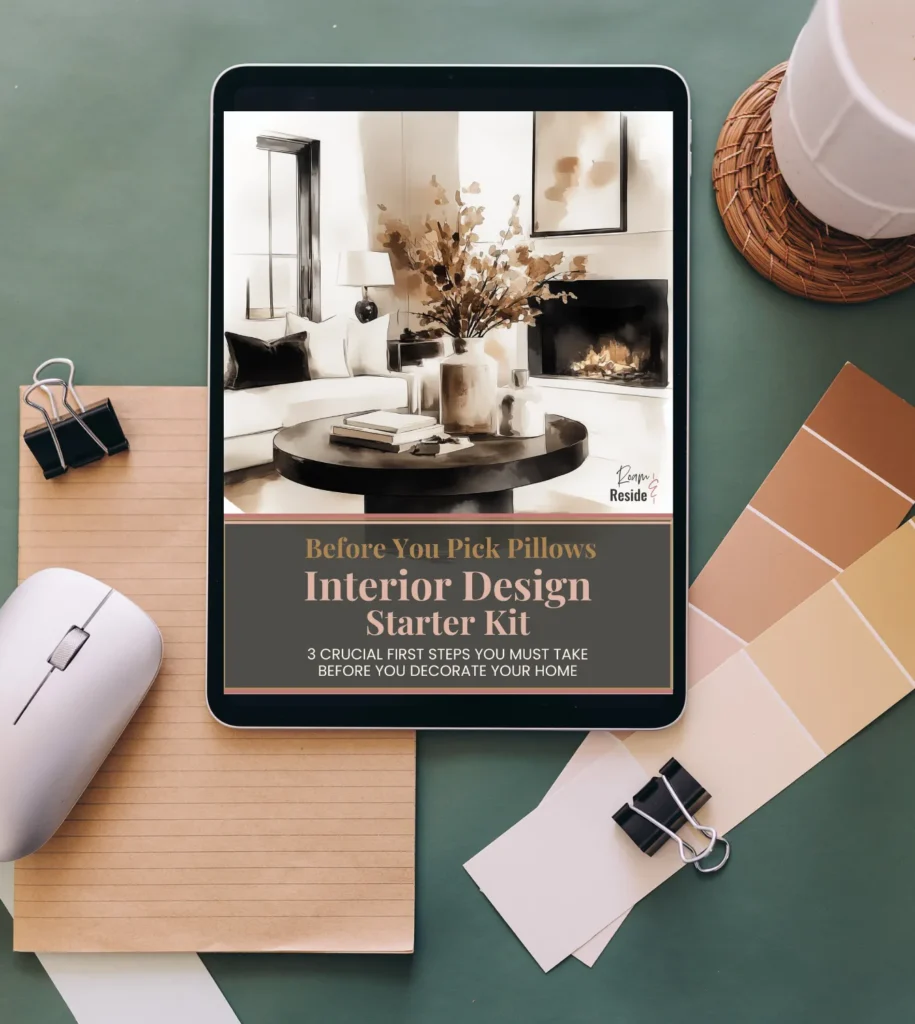
Not sure where to start? Start here.
Wondering how to pull all of your pieces together and make one cohesive room?
That’s exactly what my Interior Design Starter Kit is for. It’s simple, fun, and helps you take the first 3 steps to set you up for style success:
- What you want it to feel like
- What’s working (and what’s not)
- What style actually fits your vibe
If you’ve ever felt stuck staring at your space and not knowing where to start, this will help.
It walks you through the whole process so nothing ends up looking like it wandered in from a different house.
Cottagecore Nursery Wallpaper & Wall Decor
If there’s one place to make a statement in a cottagecore nursery, this is it. The walls are where the whole story starts — and in cottagecore, that story usually involves flowers, botanicals, and the kind of pattern that makes you stop mid-sentence to admire it.

Cottagecore Wall Decor
Once your walls are sorted, the decor layered on top should feel like it grew there — not like it was hung by someone working through a checklist.
Botanical prints are the obvious choice and the right one. Framed vintage-style illustrations of wildflowers, herbs, or garden scenes bring in that nature-forward energy without competing with wallpaper. A gallery wall of three to five small prints, slightly mismatched in frame style, feels collected rather than coordinated — which is very much the cottagecore spirit.
A fabric canopy over the crib is one of those details that takes a nursery from nice to genuinely dreamy. A simple sheer white canopy draped from the ceiling creates instant atmosphere, costs almost nothing, and photographs like a magazine shoot. You’re welcome.
What to skip: vinyl wall decals that look like clip art, neon signs, and anything that requires a hashtag to explain. Cottagecore wall decor should feel like it has a quiet story to tell — not like it’s announcing itself.
Cottagecore Wallpaper
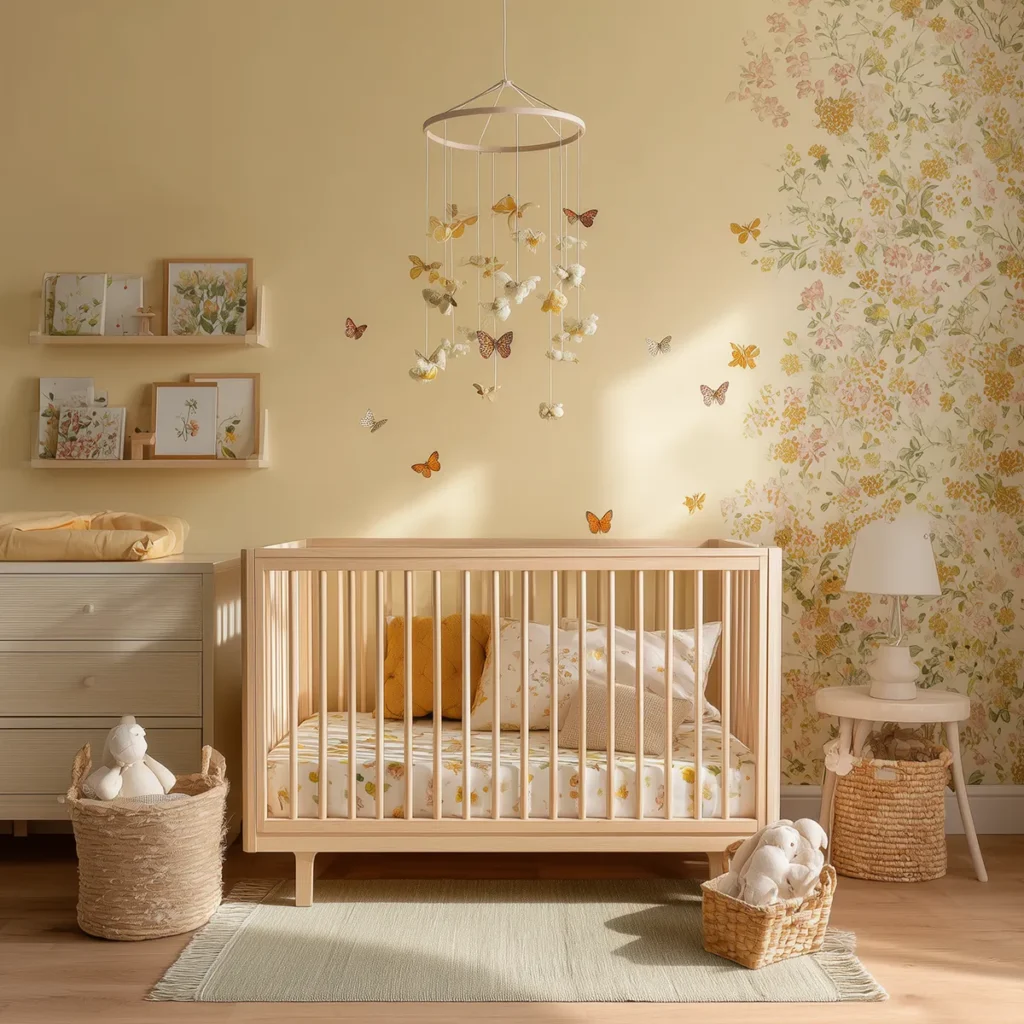
Floral wallpaper is the cottagecore nursery’s greatest power move. One well-chosen wallpaper on a single accent wall — typically behind the crib — can do more for the room than a month of Pinterest scrolling. You don’t need to paper all four walls. You need to paper the right one.
What to look for: soft, painterly florals over graphic or geometric ones. Climbing vines, meadow wildflowers, delicate botanicals. Colors that pull from your palette rather than introduce new ones. Scale matters too — an oversized floral print can be stunning in a larger room and suffocating in a small one. When in doubt, go smaller.
For renters or the commitment-averse: peel-and-stick wallpaper is actually genuinely good now. They look like the real thing and come down without drama when you’re ready.
And if you want the most memorable move, consider a mural—garden, woodland, meadow—instant storybook.
Cottagecore Nursery Textiles
If furniture is the bones of a cottagecore nursery and wallpaper is the skin, textiles are the soul. They’re what make a room feel lived-in, loved, and genuinely warm — the difference between a space that looks like a cottagecore nursery and one that actually feels like one.
And luckily, they’re also the easiest (and most forgiving) layer to change as your baby grows up and gets opinions on everything.

Crib: Keep it simple and safe: a fitted sheet in a delicate floral, gingham, or linen is all you need (and safe, for that matter). Resist the urge to pile in bumpers, quilts, and decorative pillows for the actual sleeping situation. Save the pretty layering only for supervised moments. A gathered linen or eyelet crib skirt, though? Fair game and very cottagecore.
Curtains: Floor-length linen or cotton voile instantly softens the room. Hang them high and wide (oldest designer trick, still undefeated). Lined curtains are worth it for naps and light control.
Rugs: Soft and washable only. Look for warm neutrals, woven texture, jute/cotton blends, or a vintage-style floral—nothing too precious, because it will not survive.
Layering details: This is where cottagecore really lives — in the throw blanket draped over the rocker, the embroidered cushion in the reading corner, the muslin swaddles folded in a wicker basket. None of these things are expensive. All of them are the difference between a room that looks designed and one that feels inhabited.
Textures to lean into: linen, muslin, cotton, boucle, crochet, macramé, gingham, eyelet. Textures to avoid: anything synthetic.
A note on color: your textiles are the easiest place to introduce pattern and color without committing to it on your walls or furniture. A dusty rose floral quilt, a sage green knit throw, a butter yellow cushion — these are low-stakes, high-impact decisions. Buy the beautiful thing. You can always move it to another room.
Cottagecore Nursery Decor Details
This is the section where cottagecore either becomes magical…or becomes too much. Details are what give the room personality, but in a style that celebrates abundance, the real design skill is knowing when to stop.

My rule: every object has to earn its place. Not just “pretty on its own,” but right in this room. Cottagecore should feel collected, not decorated—like each piece has a tiny backstory. The second it starts reading like a home goods display shelf, you’ve gone one item too far.
With that said — here’s what earns its place beautifully.
The Mobile
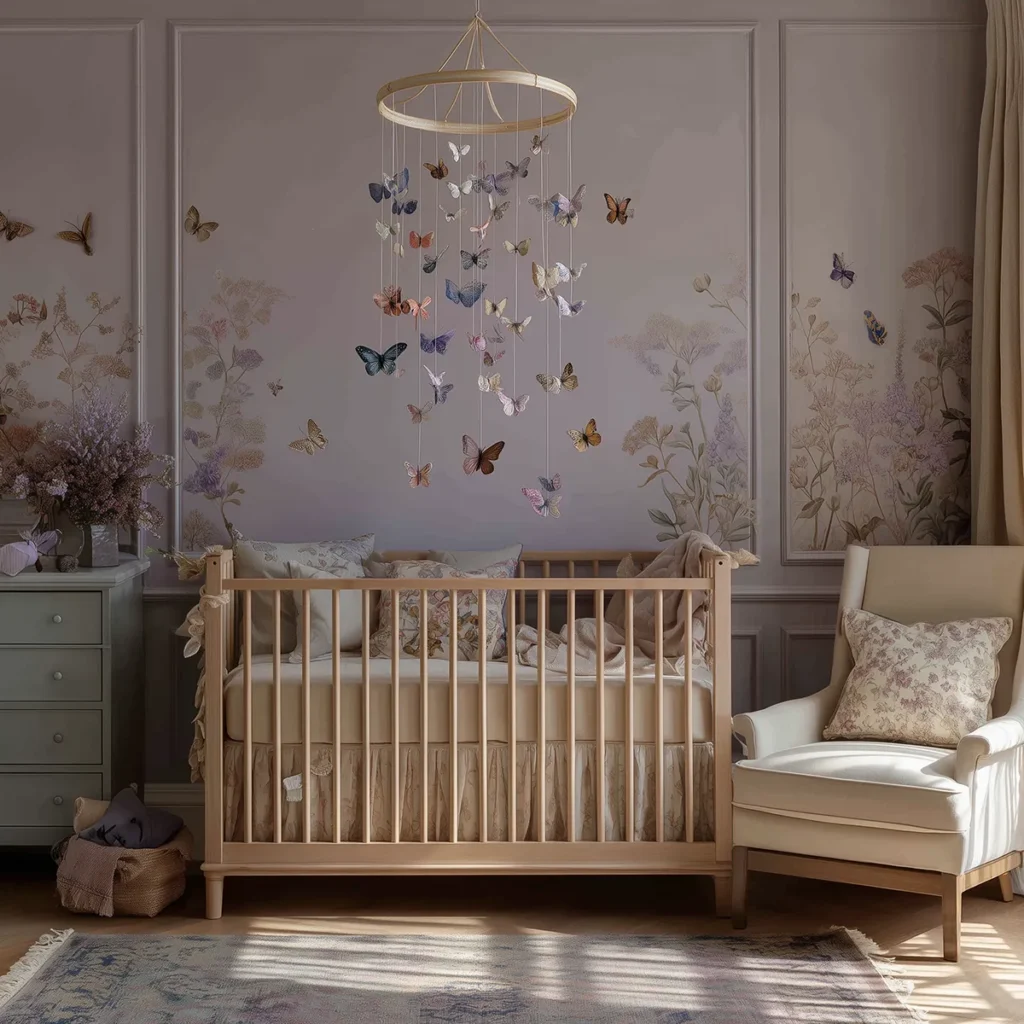
The crib mobile is the first thing your baby will actually look at with genuine focus and fascination — which means it’s both a design moment and a developmental one. Go for soft, gentle shapes: fabric florals, delicate butterflies, felt woodland creatures, simple botanicals in muted tones. Skip anything high-contrast or overly busy. The goal is gentle wonder, not sensory overload.
Baskets
Wicker and rattan baskets are the workhorse of cottagecore storage — and the rare case where practical and beautiful are exactly the same thing. Use them for blankets, toys, diapers, books. Stack them, line them up, tuck them under the dresser. They add texture, they corral chaos, and they look intentional even when they’re full of burp cloths. A win, all around.
Plants (Real or Fake, No Judgement)
A little greenery instantly makes a nursery feel alive—pothos up high, a small fern on a dresser, a few eucalyptus stems in a ceramic vase. Keep anything real out of reach and make sure it’s non-toxic (babies are fast and chaotic in the cutest way). And if real plants feel like one more thing you have to keep alive? Fair. A high-quality faux plant in a beautiful pot totally works here.
Pro Tip: Keep plants out of reach, choose low-maintenance varieties, and make sure nothing is toxic if ingested. Babies get curious fast and will surprise you.
Books
A small collection of beautifully illustrated kids’ books is one of the easiest ways to add soul. Display a few face-forward on a low shelf, mix in classic storybooks, and let it build over time. It’s quiet, charming, and it makes the room feel like it’s already telling a story.
Lighting
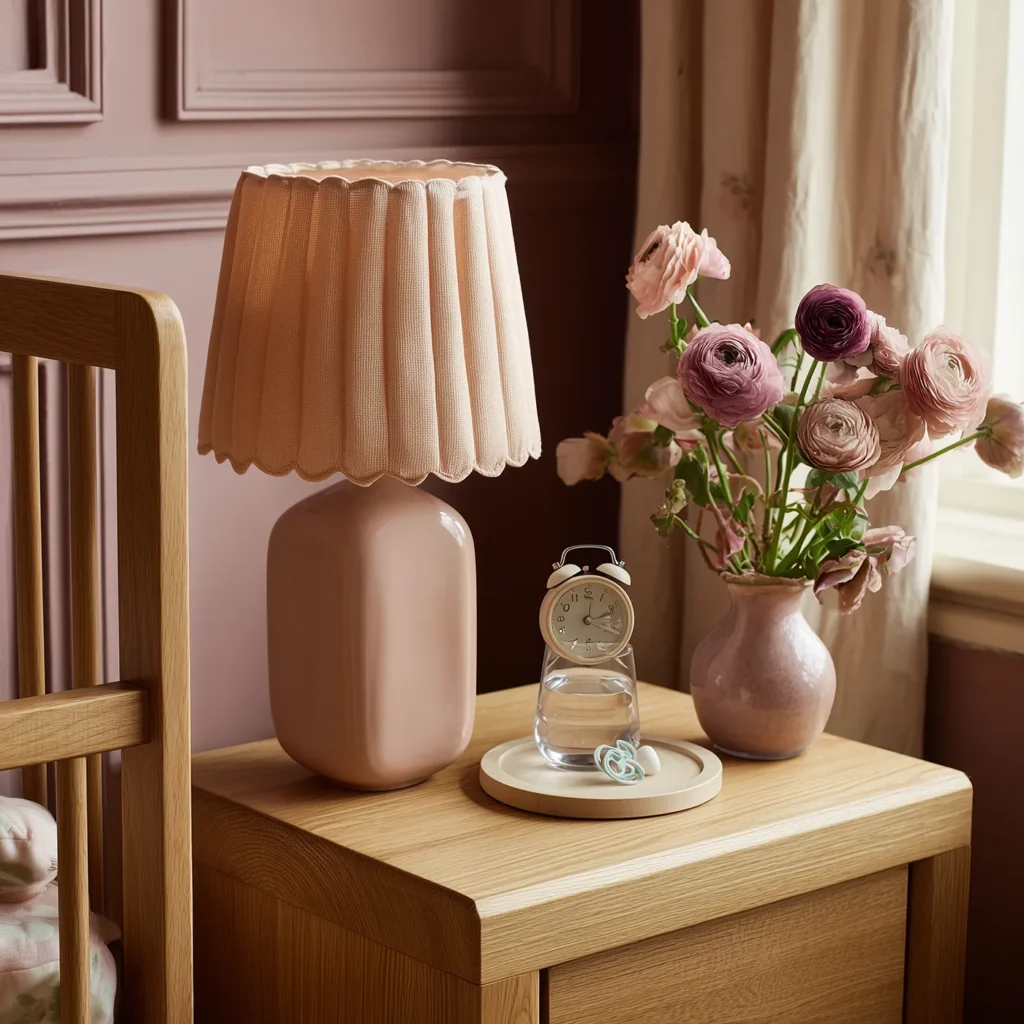
This one matters more than most people realize. Overhead lighting in a nursery is almost always too harsh — and in a cottagecore nursery, it’s practically a design crime. Layer your lighting: a warm-toned table lamp on the dresser, a small nightlight for night feeds, fairy lights tucked along a shelf or draped above the crib canopy for that golden, storybook glow. The goal is a room that feels like early evening all the time — warm, soft, and a little bit magical. And dimmers will save your sanity. You’re welcome.
Ceramics + Decor
A small ceramic vase, a wooden animal, a handmade dish, a vintage-style clock—these are the finishing touches that make a room feel personal instead of assembled. Cottagecore loves imperfect, handmade, unique things. Choose pieces that mean something, or at least feel like they could.
What to edit out: anything battery-operated that makes noise on its own, anything logo-heavy, and anything that could be described as “fun and bright” when you’re going for “quietly enchanting.” Editing is the hardest part. It’s also the part that makes it beautiful.
Wondering How to Put This All Together?
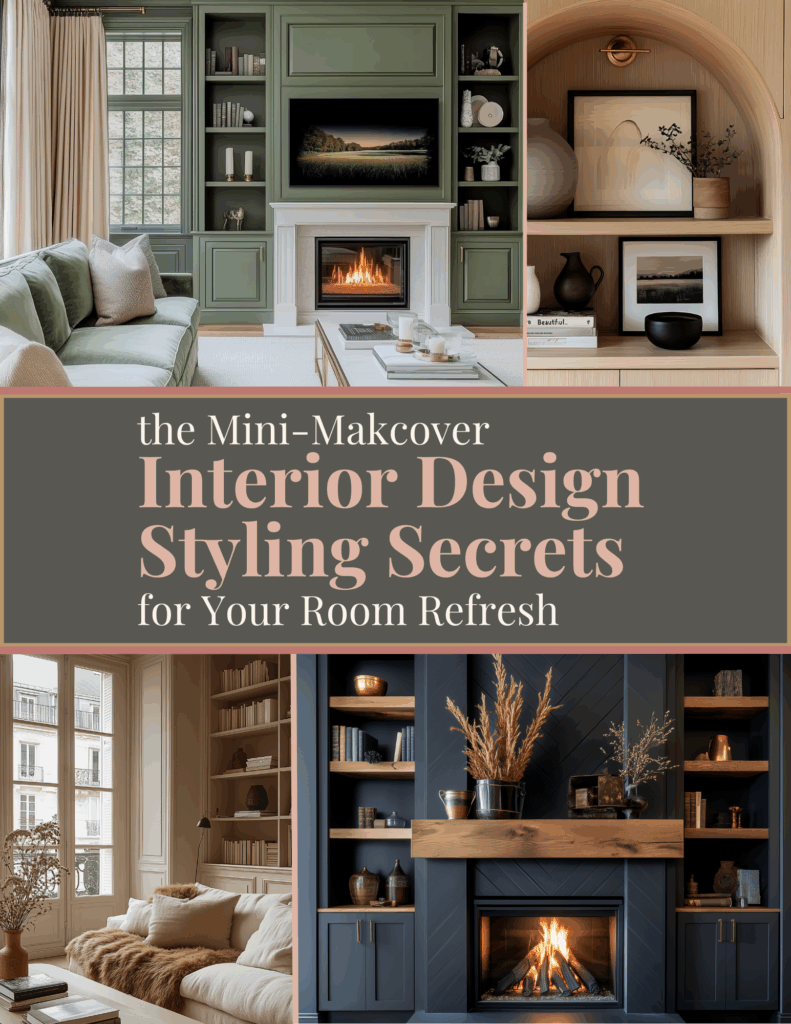
If you’re reading this thinking, “Cool… but how do I make it look styled and not like I just… placed items,” hi. That’s exactly why I made my Mini-Makeover Styling Guide.
It shows you how to layer accessories like a designer—so your baskets, books, and stuffies look collected and effortless, not random and fussy.
Grab it before you buy one more “cute” thing that doesn’t have a plan.
Once you have it, you’ll never “why does this look off?” again.
How to Design a Cottagecore Nursery from Scratch
Here’s the truth about designing a nursery from scratch: most people start with a single obsession—the crib, the wallpaper, the perfect sage green—and then spend the next three months trying to force the rest of the room to cooperate. You end up with a bunch of cute pieces… and a room that still somehow doesn’t feel finished.
Designers don’t work like that. Especially with nurseries—where you’re on a deadline, running on fumes, and getting opinions from everyone you’ve ever met—having a process isn’t “extra.” It’s the difference between a room you love and a room you’re still quietly bothered by two years later.
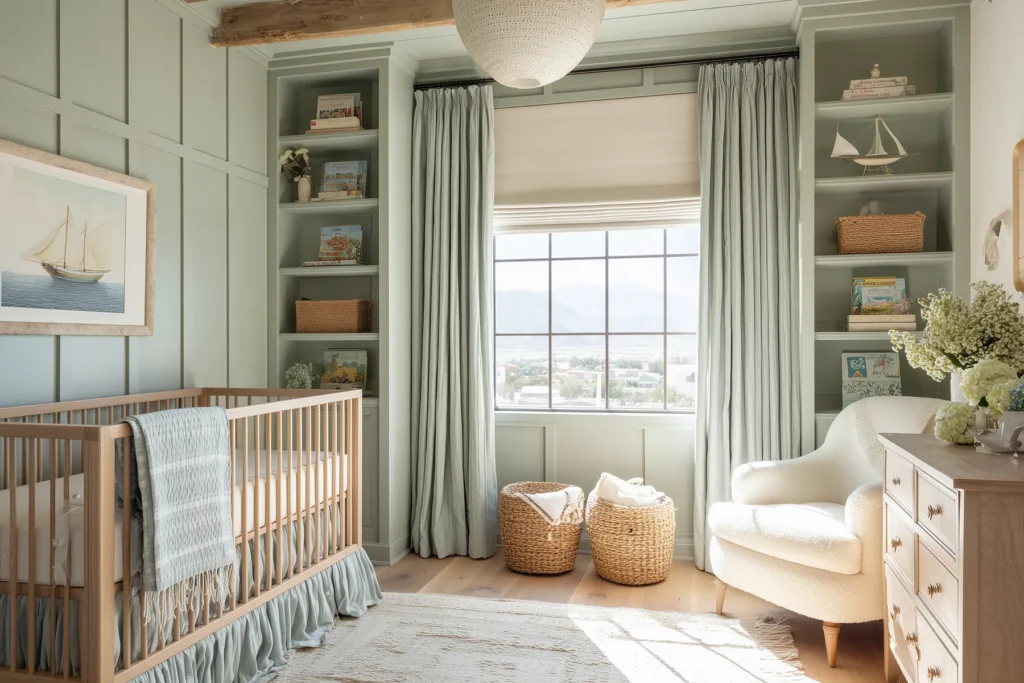
Here’s How to Decorate a Cottagecore Nursery
Step 1: Start with a feeling, not a product.
Before you open a single tab, decide how you want the room to feel—not look. Calm and dreamy? Warm and storybook? Soft and romantic? Grounded and earthy? That feeling becomes your filter for every decision that follows. When you’re staring at two rugs and your brain is buffering, you go back to the feeling. One supports it. One doesn’t. Done.
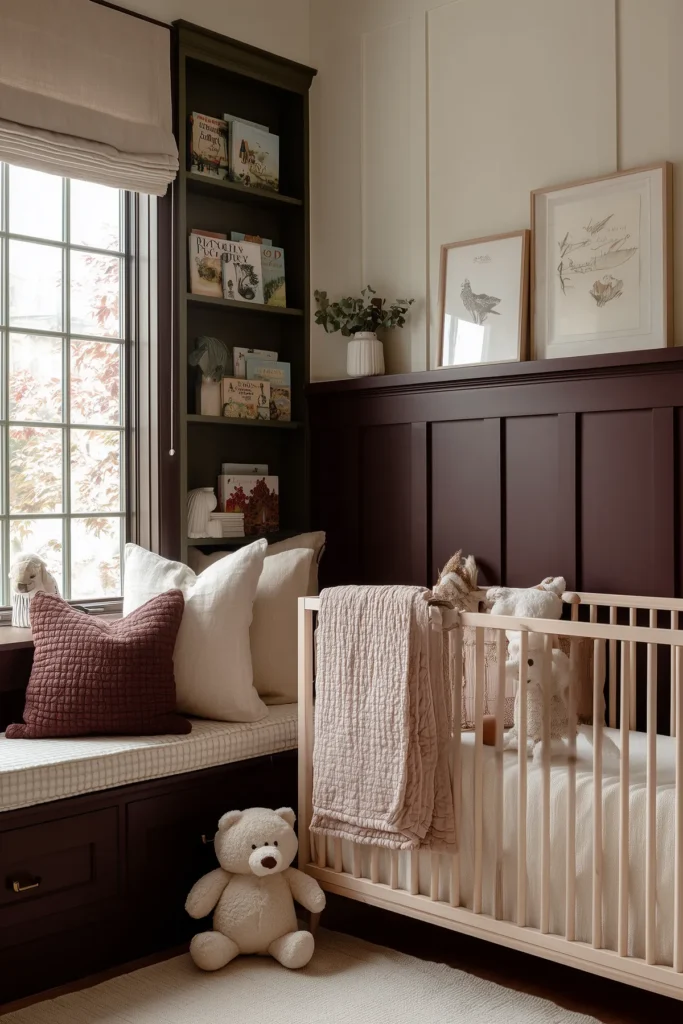
Step 2: Build your color palette.
Now give that feeling a palette. For cottagecore, start with your wall color first (warm white, soft green, gentle sage), then choose one accent and one grounding neutral. Everything else should respond to those choices—not freestyle its way into the room.
Want the full breakdown + palette combos? Head here → Cottagecore Color Palettes.
Step 3: Choose your anchor piece.
In a nursery, this is almost always the crib. It’s the biggest piece, the visual center, and everything—wall color, wallpaper, textiles, decor—will be seen in relation to it. Choose it early. Choose it on purpose. Don’t let it be the last-minute panic purchase.
Step 4: Layer in your furniture.
Once the crib and palette are set, the rest gets easier—because you’re not starting from zero anymore. Dresser, rocker, bookshelf: each piece should feel like it belongs to the same story as the walls and the crib. Warm, cohesive, and intentional.
Step 5: Add textiles.
Textiles are what make it feel finished. Start with curtains (they frame the room and soften the light), then rug, then crib textiles, then the cozy layering pieces. This is where cottagecore stops looking like a collection of items and starts feeling like a room.
Step 6: Finish with decor.
Last in, not first. Decor is the punctuation, not the sentence. Add it slowly, step back often, and edit ruthlessly. Seven well-chosen pieces will always look better than twenty “but it’s cute” extras.
You’ve Got a Baby On the Way…Let’s Make this Easier for You
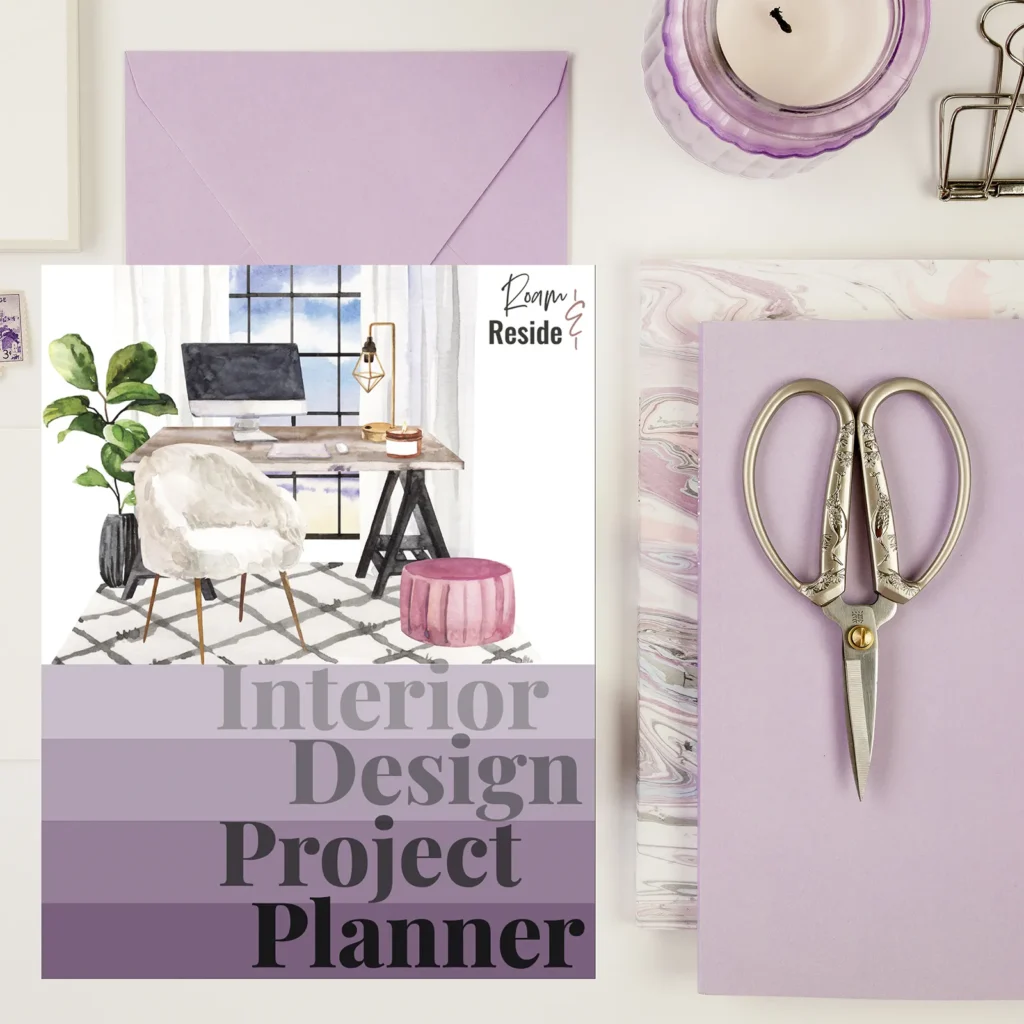
This is the part where people lose momentum: they have the ideas, but not the plan. My Interior Design Project Planner keeps you moving—so you don’t end up with half a nursery, a cart full of “cute” items, and no cohesive room. If you want the nursery to come together faster (and look more intentional), this is the right move.
(Because, you’ve got much more important things to focus on with baby on the way!)
Cottagecore Nursery FAQs
Is Cottagecore a good interior design style choice for a nursery?
Yes, cottagecore is a great choice for a nursery because it naturally leans soft, calm, and comforting, which is exactly the mood a baby room wants. It also ages better than a super-themed space, so the room can grow with your child instead of needing a full redesign in two years. Think timeless charm, with a little extra soul.
What is a cottagecore nursery?
A cottagecore nursery is a baby’s room designed with cozy, storybook charm, rooted in the romantic English countryside. It leans on natural materials (warm wood, linen, cotton), soft florals and botanicals, vintage-inspired touches, and warm, muted earth tones. The goal is whimsical and inviting; not themed, not frilly, and definitely not sterile.It’s whimsical and warm without being fussy, and it’s one of the fastest-growing nursery design trends right now.
What colors work best in a cottagecore nursery?
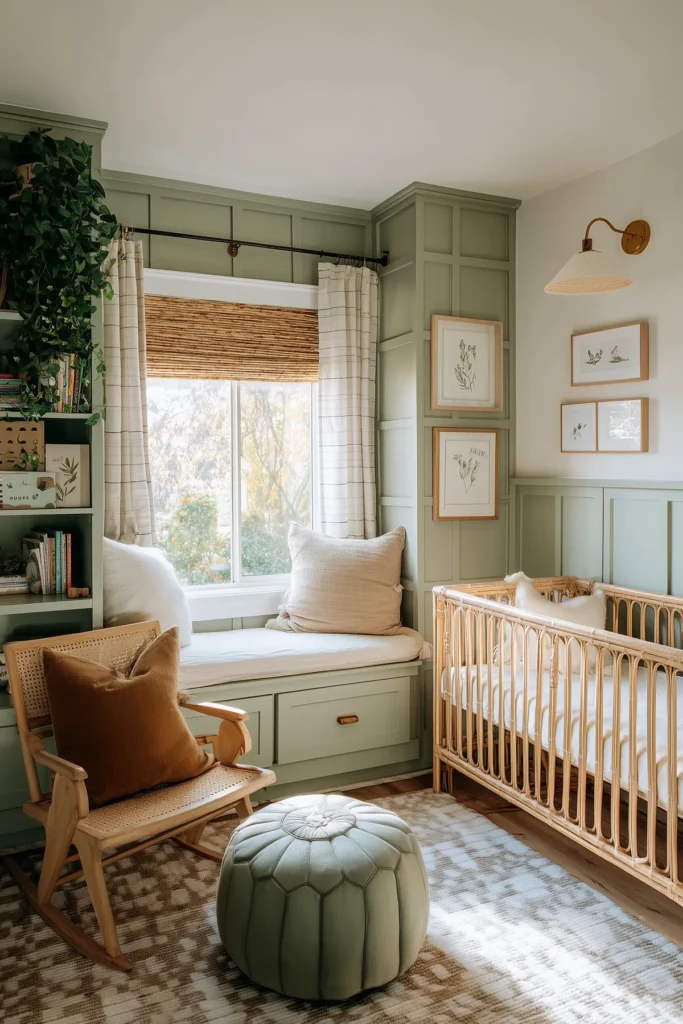
The cottagecore nursery palette is built around warm, muted, nature-inspired tones. The most common choices are creamy whites and soft greens for walls, with dusty rose, butter yellow, soft lavender, or muted terracotta as accent colors. Warm neutrals — mushroom, aged linen, soft tan — ground the palette and show up in furniture and textiles. The key across all of them: keep it muted, keep it warm, and avoid anything that reads bright or synthetic. Check out my Cottagecore Color Palettes Guide to see inspo and examples.
Is a cottagecore nursery gender neutral?
Absolutely. While cottagecore is often associated with soft pinks and florals, it’s one of the most naturally gender-neutral aesthetics in nursery design. A palette built around sage green, warm white, and butter yellow reads beautifully for any baby — as does a woodland or botanical theme in muted earth tones. The style is defined by its connection to nature and warmth, not by pink or blue.
What’s the difference between a cottagecore nursery and a farmhouse nursery?
They’re close cousins but not the same. Farmhouse nurseries tend toward a more rustic, utilitarian aesthetic. Think shiplap, galvanized metal, neutral palettes, a cleaner and more spare sensibility. Cottagecore is warmer, more romantic, and more whimsical. It leans into florals, vintage details, and a storybook quality that farmhouse style typically doesn’t. If farmhouse is the barn, cottagecore is the garden.

How do I make a cottagecore nursery on a budget?
Cottagecore is genuinely one of the most budget-friendly nursery aesthetics because it celebrates vintage, handmade, and found objects, and thrifted furniture fits right in. A secondhand rocking chair, a hand-me-down quilt, botanical prints in inexpensive frames, and wicker baskets from any home goods store are the building blocks of the style and none of them require a significant investment. Focus your budget on the crib (safety first, always) and the wallpaper if you’re going that route, and let the rest come together slowly and affordably.
What furniture do I need for a cottagecore nursery?
The essentials are a crib, a dresser, and a comfortable rocker or glider. For cottagecore specifically, look for warm wood tones over white painted finishes, simple silhouettes with a slightly vintage feel, and hardware in aged brass or matte black. You don’t need a perfectly matched suite — a slightly collected, mismatched approach actually feels more authentically cottagecore than a coordinated showroom set.
Can cottagecore work for a small nursery?
Yes, and in some ways it works better. Cottagecore’s warm palette and soft textures make small spaces feel cozy rather than cramped. The key is restraint: choose fewer, better pieces, use wallpaper on one accent wall rather than all four, and let the textiles and lighting do the heavy lifting. A small cottagecore nursery done well feels like the best kind of secret.
Your Nursery, Your Story
A cottagecore nursery isn’t just a design choice. It’s a whole mood — a quiet declaration that this small person is arriving into a world that’s warm, beautiful, and full of wonder. That the room waiting for them was thought about, considered, and put together with genuine care.
And yes, that takes a little more intention than grabbing a themed set from a big box store. But that’s the whole point, isn’t it? Cottagecore has never been about the shortcut. It’s about the slow, satisfying process of building something that feels genuinely yours.
You’ve got the inspo. You’ve got the palette. You’ve got the framework. Now go make the room.
Stop scrolling. Grab Your Free Lookbook.
If you want all of this, the palettes, the inspo, the pro tips, all together in one place you can actually pin, shop, and plan from, this free Cottagecore Aesthetic Guide has you covered.
→ Download your free lookbook and start decorating the nursery of your dreams.
Love a good nursery moment? Here are my top 3 Cottagecore Baby Buys:
Here are three of my favorite cottagecore nursery finds:
- A 7-drawer rose-colored dressing table (yay, lotsa storage!)
- A green gingham glider.
- A baby blue convertible crib
Where to go Next? Check Out These Related Styles:
Coastal + Nautical Nursery Style Guide
And if you’re looking for another baby room direction to consider? My Nautical Nursery Guide offers a softer coastal take, with timeless charm, breezy texture, and a look that feels sweet without going overboard. They’re cute, chic, and never cliché.
Oh, and of course, I’ve got a free downloadable Nautical Nursery Lookbook style guide in that post as well. So check it out for yourself, or send to a friend who needs some breezy coastal baby room inspo.
More Cottagecore Interior Design Inspo
If you’re drawn to modern cottagecore, don’t stop at the nursery. This Modern Cottagecore room-by-room style guide shows you how to translate the style into a full home that feels charming, livable, and beautifully pulled together.
Need help choosing colors? My Modern Cottagecore Color Palettes Guide walks through the soft, earthy shades that make this aesthetic feel cozy, timeless, and easy to live with.
If you’re looking for a more mysterious and moody vibe, check out my Dark Cottagecore Aesthetic post here.
And if you love pink, you’ll want to check out my post on best practices for how to create a modern soft blush color palette in your home.
And if you want to see a dramatic cottage bedroom makeover, check out my Room Roast: The Frill of It: A Cautionary Tale of Ruffles and Restraint.
